Short answer: Start designing now, in November through January. In Southwest Florida, planting season opens in February, not April. Design takes a few weeks, the good trees sell out, and a tree in the ground by March has cool weather and a full rainy season to settle in before its first summer. Wait until April and you're planting into the hottest, driest stretch of the year.
Florida Spring Doesn't Start in April
Up north, spring means April. Here, our "spring" is February and March.
Days are mild. Nights are cool. Trees push roots instead of fighting heat. Then April and May hit: no rain, full sun, 90-degree days. A tree planted in February has a two-month head start on that. By the time the June rains show up, it's already growing.
So if you want to plant in February, the design has to be done in January. That means the conversation starts now.
What Happens Between Now and Planting Day
Here's how a winter design season actually runs.
November–December: Walk the property. We map sun, shade, wind, low spots and where water sits after a storm. We test the soil. We talk about what your family actually eats.
December–January: Design and source. The plan gets drawn. Trees get chosen by variety, not just by type. We source from nurseries before the best grafted trees are gone. Bigger trees fruit sooner: money can buy time.
February: Build and plant. Soil building, mulch, irrigation, support plants and the cold-hardy fruit go in first: figs, mulberry, pomegranate, loquat, Barbados cherry.
Late February–March: The tropicals. Mango, avocado, papaya and banana go in once the frost risk drops. North of Fort Myers, we don't plant cold-sensitive tropicals mid-December through January. Last winter proved why. A hard freeze hit Florida in late January and early February 2026. Plant the tropicals once that window passes, and keep a frost cloth handy.
April–May: Water and watch. Dry season. Irrigation does the heavy lifting. Papaya, banana, mulberry, figs, pomegranate and Barbados cherry can fruit in year one.
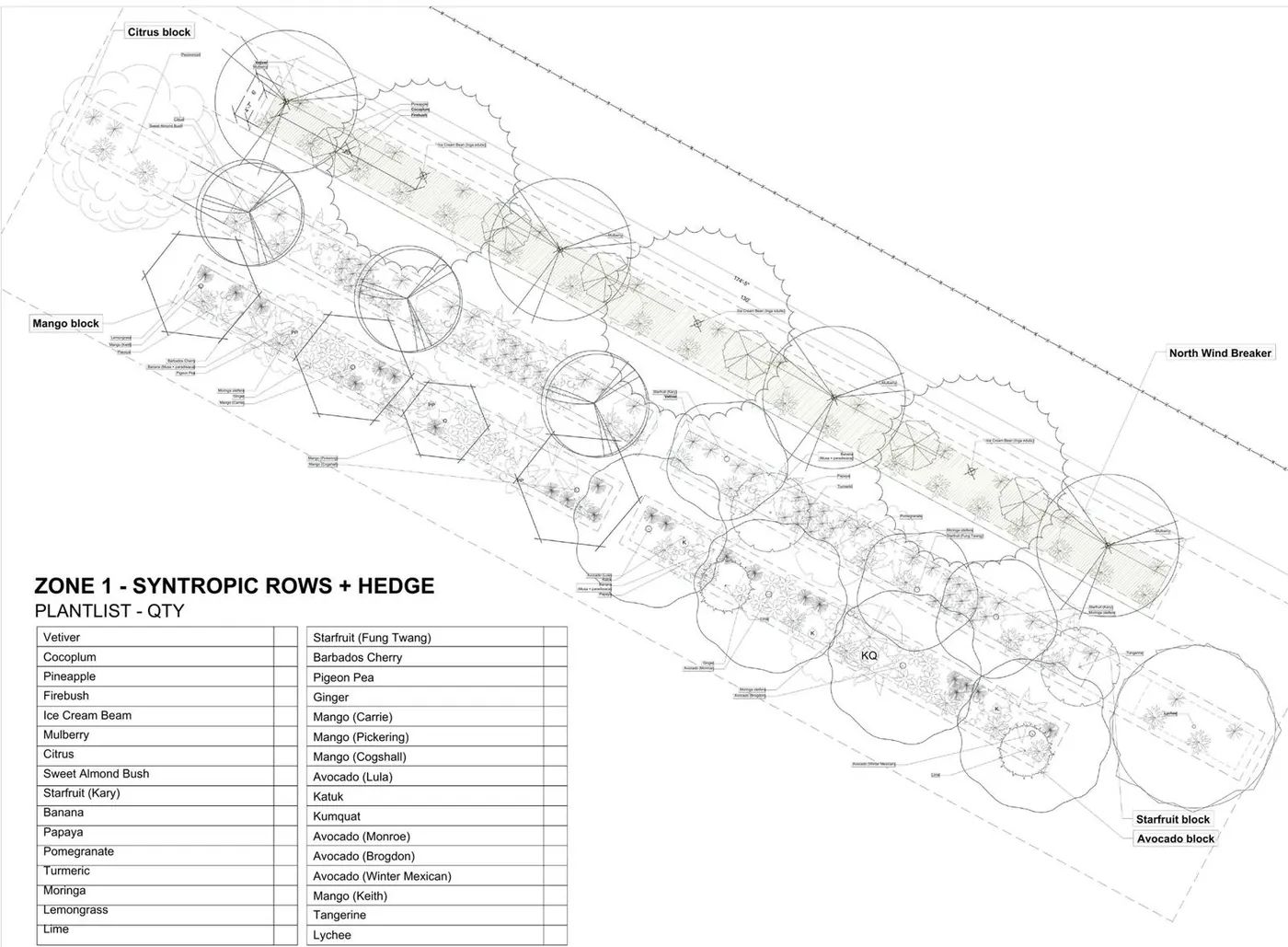 A real Zone 1 planting plan. This is what you get before a single tree goes in.
Private Residence, Bradenton, FL. 2024 to 2026.
Design for Harvest All Year, Not One Big Week
This is the part most people miss.
Plant one mango and you get one big flush. Fifty mangos in three weeks. You give half away and the squirrels get the rest.
Plant three mangos that ripen at different times and you eat mangos from spring into fall. Same with avocados. Same with the whole yard.
That's what we design for. Not just which fruit, but which variety, so the harvest walks across the calendar.
Mango: Spring Into Fall
Florida mango season runs from about March into October, depending on variety. Mix early, mid and late:
| Season | Varieties we like | Roughly ripe |
|---|
| Early | Rosigold | March–April (sometimes a second crop) |
| Early | Glenn, Cogshall | May–June |
| Mid | Nam Doc Mai, Kathy | June–July |
| Late | Kent | Late July–September |
| Late | Keitt, Neelum | August–October |
Rosigold and Neelum stay small. Good news for smaller yards. More on these in the best mango varieties for Florida.
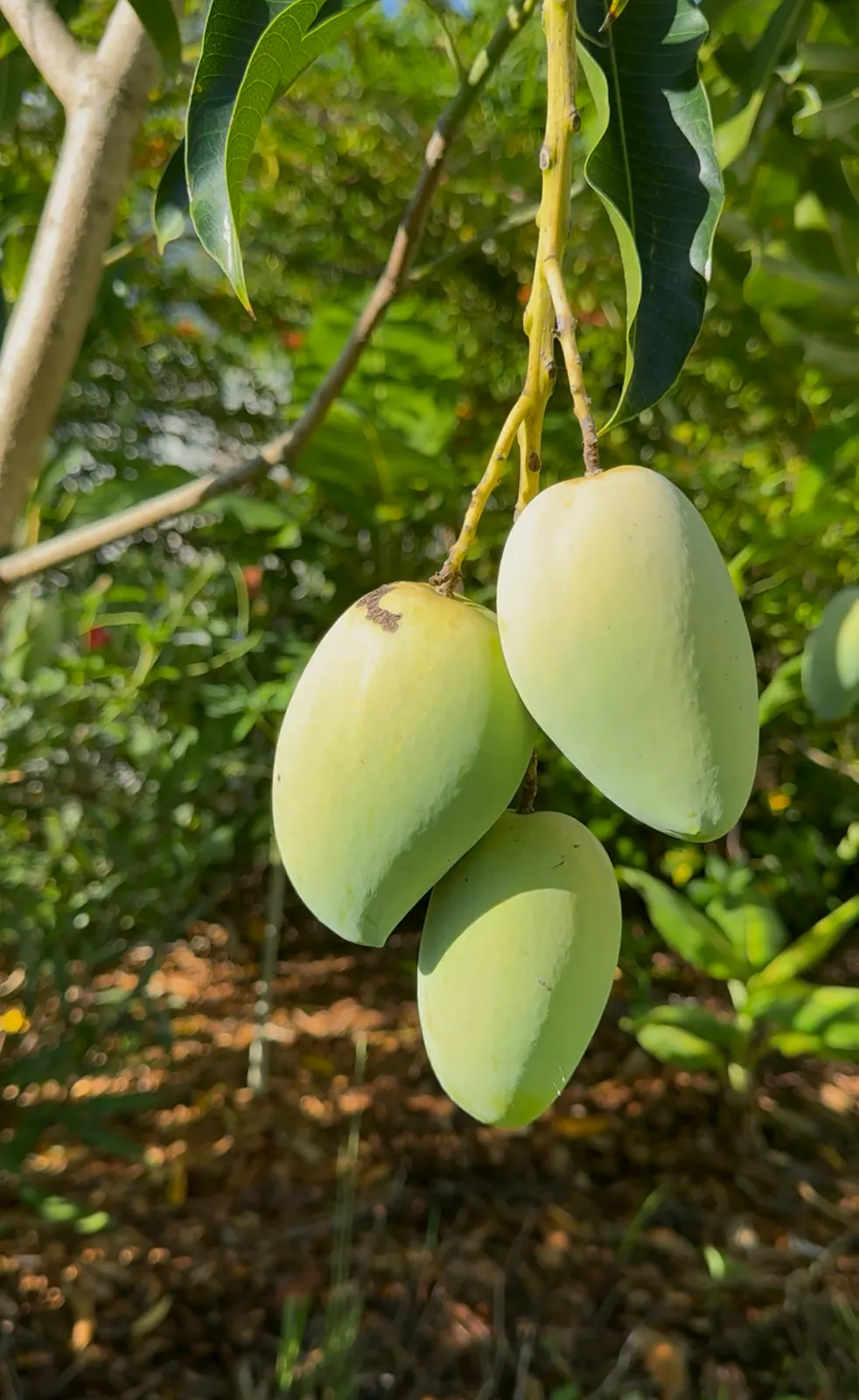 Bradenton, FL. Mango season.
Avocado: Summer Into Winter
UF/IFAS puts Florida avocado season at June through March. One tree gives you a few weeks. Three trees can cover most of the year:
| Season | Varieties | Roughly ripe |
|---|
| Early | Donnie, Simmonds | Summer |
| Early–mid | Brogdon | July–September |
| Mid | Miguel, Beta | Fall |
| Late | Choquette, Monroe | Fall into winter |
Brogdon is one of the most cold-tolerant avocados you can find here. Choquette and Monroe hold up better than the summer types too. That matters if you're north of Fort Myers.
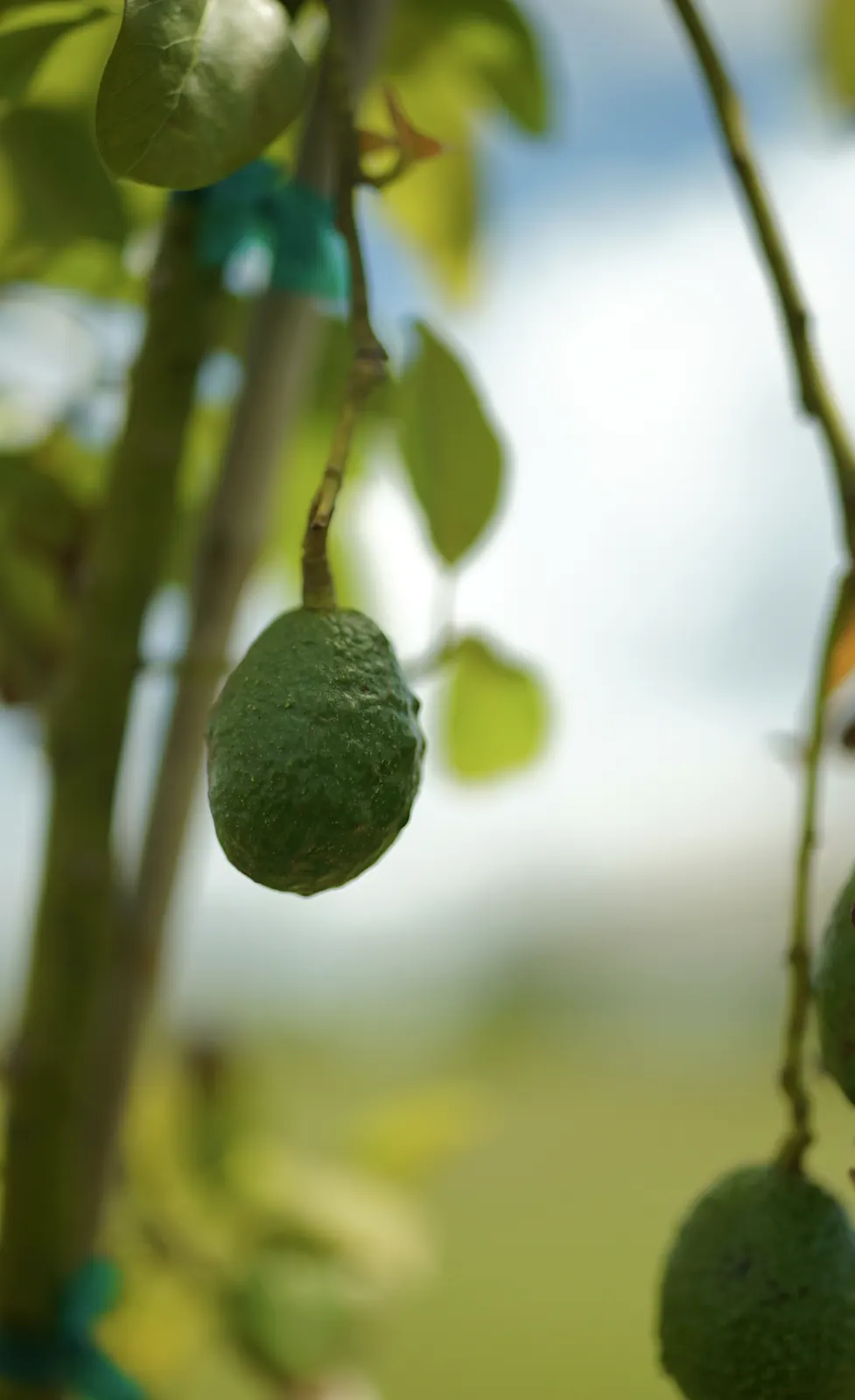 Private Residence, Sarasota, FL.
Fill the Gaps With Fruit That Never Stops
Then we layer in the steady producers:
- Papaya and banana: fruit year-round once they're going.
- Barbados cherry: several flushes a year.
- Mulberry and loquat: late winter into spring, right when the mangos haven't started.
- Citrus: fall and winter.
- Figs and pomegranate: summer.
Put it together and something is ripe almost every month. That's the goal.
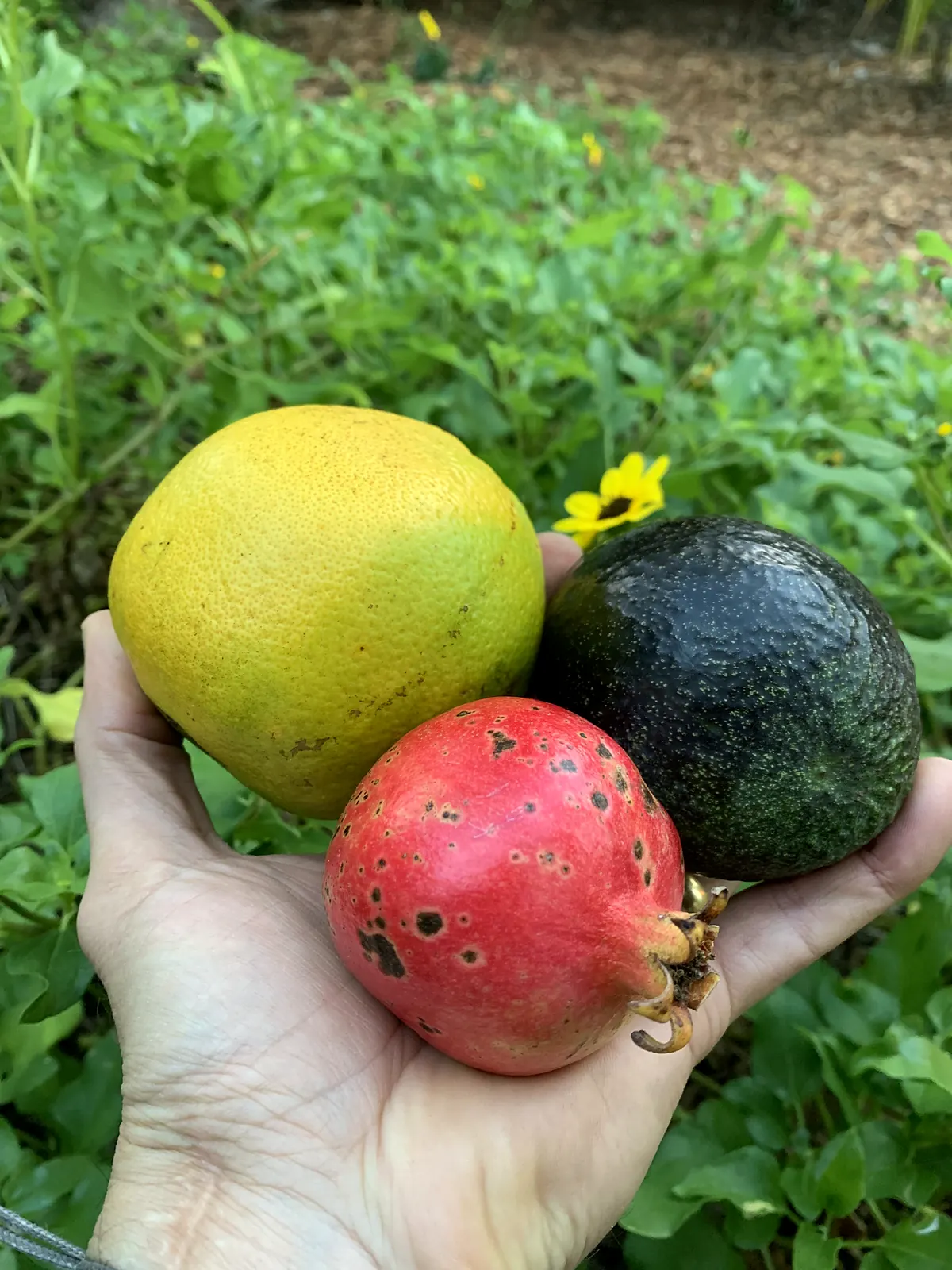 One basket, three seasons of fruit.
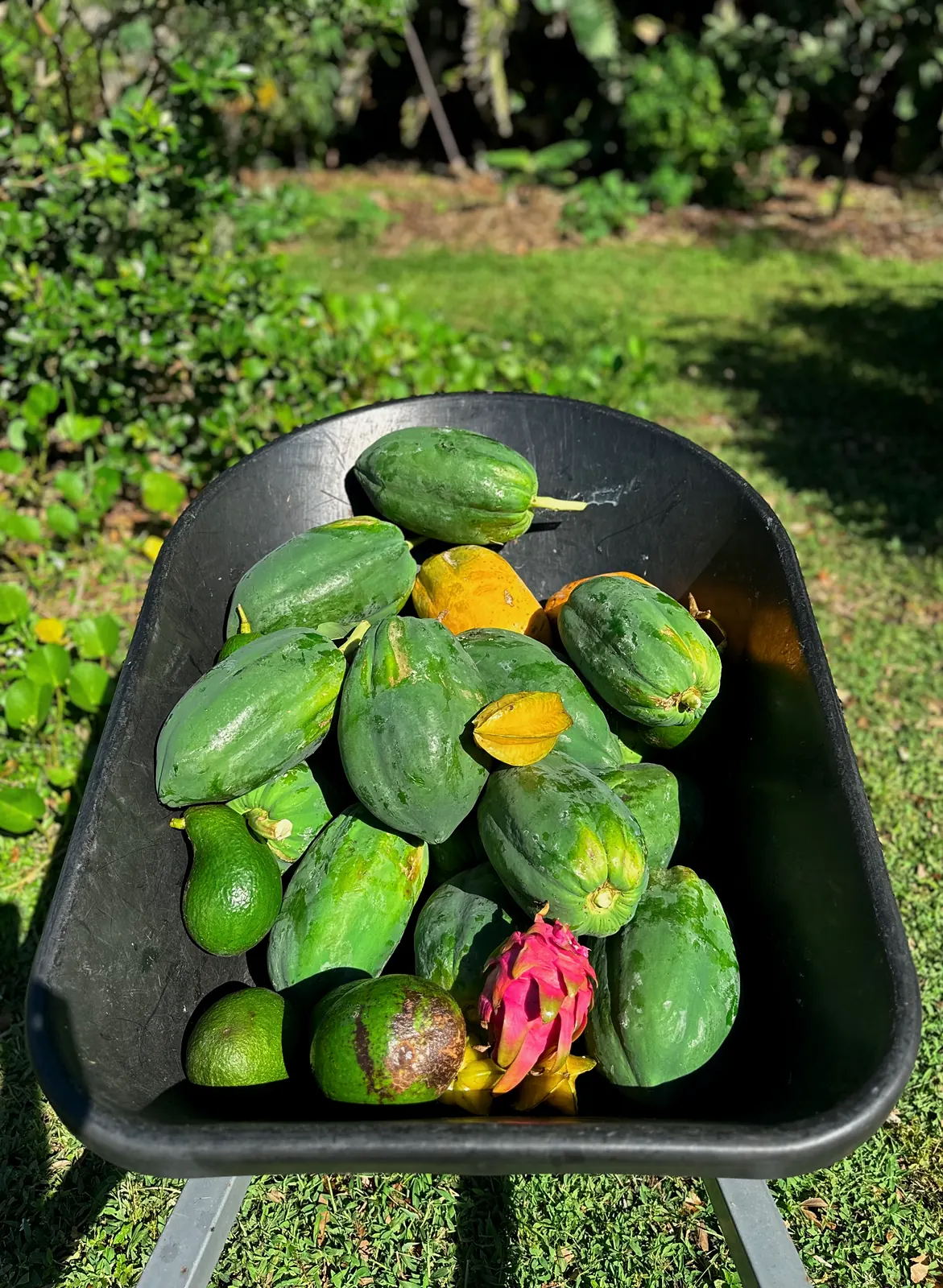 Papaya doesn't take a season off.
Seasonal Residents: Plant for When You're Here
If you're in Florida November through April, a July mango won't help you much. Tell us your calendar. We'll lean on winter avocados, citrus, loquat, mulberry, Rosigold mango and papaya, so the trees fruit while you're home.
Why Book the Design Now
- Trees sell out. The good grafted trees in larger sizes go first.
- Install calendars fill. February and March are our busiest months.
- You get the full first summer. Planted in February, the tree has six months of growth before its first winter.
Our $350 site consult is credited toward a Genesis Garden Design + Build of $14K or more. Not ready for a full design? Eden Zones get a defined area planted in one day.
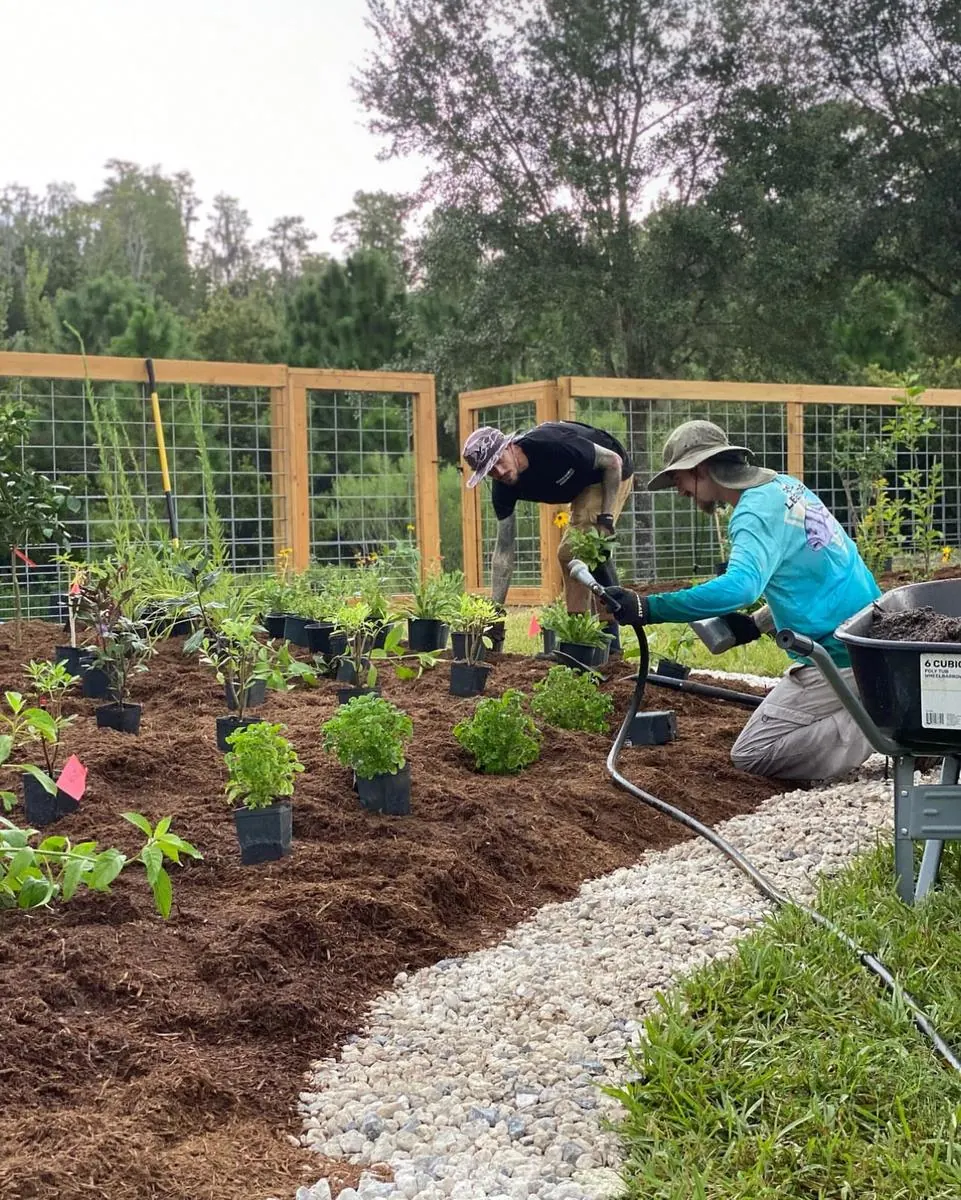 Planting day.
Start With the Fruit You'll Actually Eat
The Florida Family Fruit Guide walks through 12 family fruits plus 13 rare "adventure" fruits we grow here. You'll see which ones fruit in year one and which ones take a few years. Bring your short list to the call. $29, instant PDF.
Ready to plant this February? Book a free 15-minute Discovery Call. We'll talk about your yard, your family and what you want to be picking a year from now.
Common questions
When is the best time to plant a food forest in Florida?
In Southwest Florida, February and March. Start the design in November through January so you're ready when planting season opens. Cold-sensitive tropicals like mango and avocado go in late February to March north of Fort Myers, after the frost risk drops.
How long does it take to design a food forest?
Usually a few weeks, from the site visit through a finished plan and plant list. Starting in November or December gives time to source the right trees before February.
Can I get fruit all year from a Florida food forest?
Close to it. Mix early, mid and late varieties of mango and avocado, then fill the gaps with papaya, banana, Barbados cherry, mulberry, loquat and citrus. Something ripens almost every month.
How do I extend my mango season?
Plant varieties that ripen at different times. Rosigold ripens as early as March, Glenn in May to June, Kent in late summer, and Keitt and Neelum into fall.
What avocado varieties should I plant in Florida for a longer season?
Combine an early type like Donnie or Simmonds, a mid-season type like Brogdon or Miguel, and a late type like Choquette or Monroe. Together they can cover summer into winter.
What fruit trees can I plant in February in Florida?
Figs, mulberry, pomegranate, loquat, Barbados cherry and citrus are good early picks. North of Fort Myers, wait until late February or March for mango, avocado and papaya.
“To everything there is a season, a time for every purpose under heaven: a time to plant…”
Ecclesiastes 3:1–2
Sources: UF/IFAS — Avocado Growing in the Florida Home Landscape (MG213) · UF/IFAS Palm Beach — Mango season · UF/IFAS Sarasota — Summer mango varieties · Fairchild — Mango varieties 2024 · ECHO — Avocados in Southwest Florida · Central Florida Ag News — 2026 freeze and mango crop