Short answer: there is no single best banana for Florida, because the varieties do different jobs. For a first banana, plant a short one. Dwarf Cavendish, Dwarf Namwah and Dwarf Orinoco stay low enough to handle wind, fruit in a reasonable time and fit a normal yard. Once you have one producing, add flavor: Ice Cream for something different, Apple for tang, Orinoco or a plantain for cooking.
Why we put bananas in almost every design
Bananas do three things at once, which is rare. They give you fruit in roughly the first year, so there is a harvest while the mango and avocado are still getting established. They throw off an enormous amount of biomass, which gets chopped and dropped to build soil. And a clump of them makes a fast, soft windbreak and privacy screen that a hedge would take years to match. In the syntropic rows we plant, bananas are usually the backbone of that structure.
Eight banana varieties grow in our Bradenton yard. They are not interchangeable, and picking the wrong one for your space is the usual mistake.
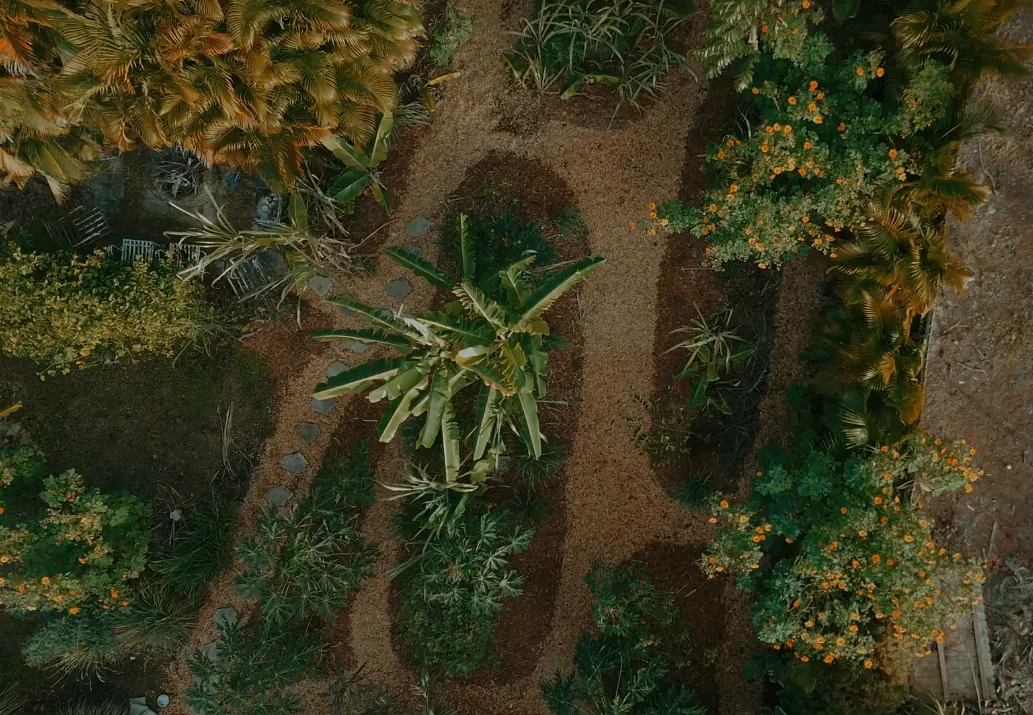 Syntropic rows in our Bradenton yard, filling in and sheltering the younger fruit trees behind them.
Start with height, not flavor
Height is the decision that matters most, and it is the one people skip. A tall banana in an open Florida yard is a sail: it blows over in summer storms, and it shades things you did not want shaded. The dwarf and semi-dwarf types, broadly those that top out somewhere around eight to twelve feet, stay standing through weather that flattens the tall ones.
A taller variety is still worth growing if you have the room and some shelter from a fence, a building or an existing canopy. Just do not make it your only banana.
The varieties we reach for
Dwarf Cavendish
The familiar supermarket flavor on a short, stocky plant. It is the safest first banana for a small yard: it handles wind well for its size, and it is widely available at Florida nurseries. It is also one of the more cold-tolerant dessert types, which matters north of Fort Myers.
Dwarf Namwah
Our workhorse. Namwah (also sold as Dwarf Nam Wah or Pisang Awak) is a short, tough, heavy-bearing plant with a sweet, slightly tangy fruit that holds up well. It takes wet feet better than most, tolerates a cool snap, and keeps producing with very little fussing. If you only ever plant one banana, this is a hard one to beat.
Ice Cream (Blue Java)
The one that makes people put their phone away. Silvery blue-green fruit with soft, creamy flesh and a vanilla note when it is properly ripe. It grows taller than the dwarfs and wants a sheltered spot, but it is the variety kids ask for by name.
Praying Hands
The strangest-looking banana we grow, and the one visitors always ask about. The fingers fuse together side by side into flat, pressed hands, so a bunch looks like rows of hands folded in prayer. You can break them apart to eat. The fruit is sweet and mild with a touch of vanilla, and the plant itself is vigorous and tall, so give it a sheltered spot.
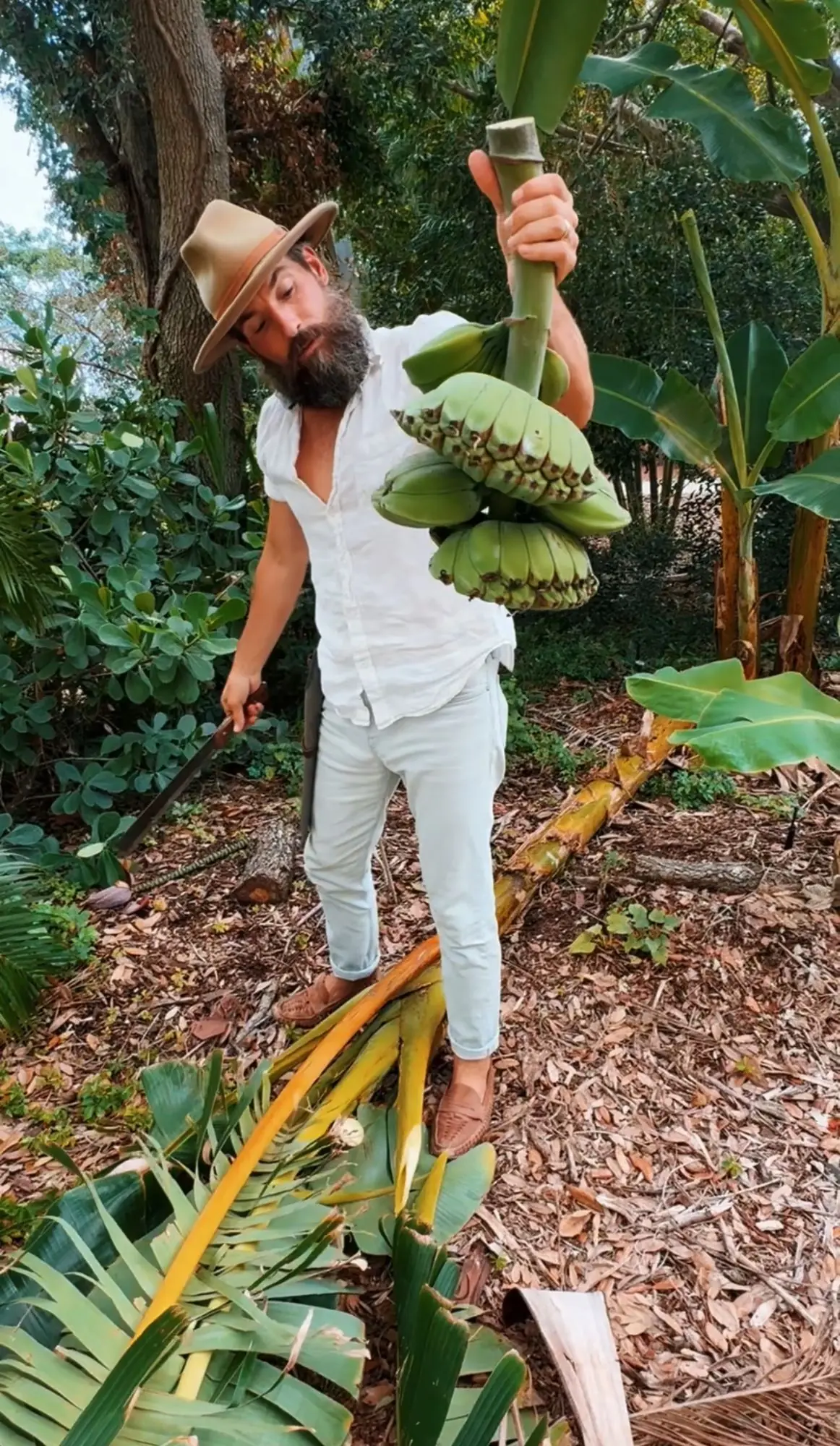 Praying Hands, just cut. The chopped mother stalk is already on the ground behind, going back into the row.
Watch: harvesting this bunch, then chopping the spent stalk back around the pups · More on our YouTube channel
Apple (Manzano)
Small fruit with a distinct apple-like tang. It has to be fully ripe, past the point most people pick it, or it is astringent and disappointing. Worth the patience, and a good one to grow next to a sweeter variety so you get range.
Dwarf Orinoco
Short, extremely sturdy, and among the more cold-hardy bananas you can plant in Florida. The fruit is thick and a little starchy, which makes it as good cooked as fresh. This is the one we lean on where wind and cold are both real concerns.
Raja Puri
Compact, wind-firm and cold-tolerant, with sweet fruit and a reputation for being forgiving. Another strong first banana, and a good choice for an exposed corner of the property.
Plantains and cooking types
If anyone in the house cooks, plant one. Plantains are not sweet bananas and are not meant to be eaten raw; they go in a pan. They generally run taller and want a sheltered spot, but a single clump produces a lot of food.
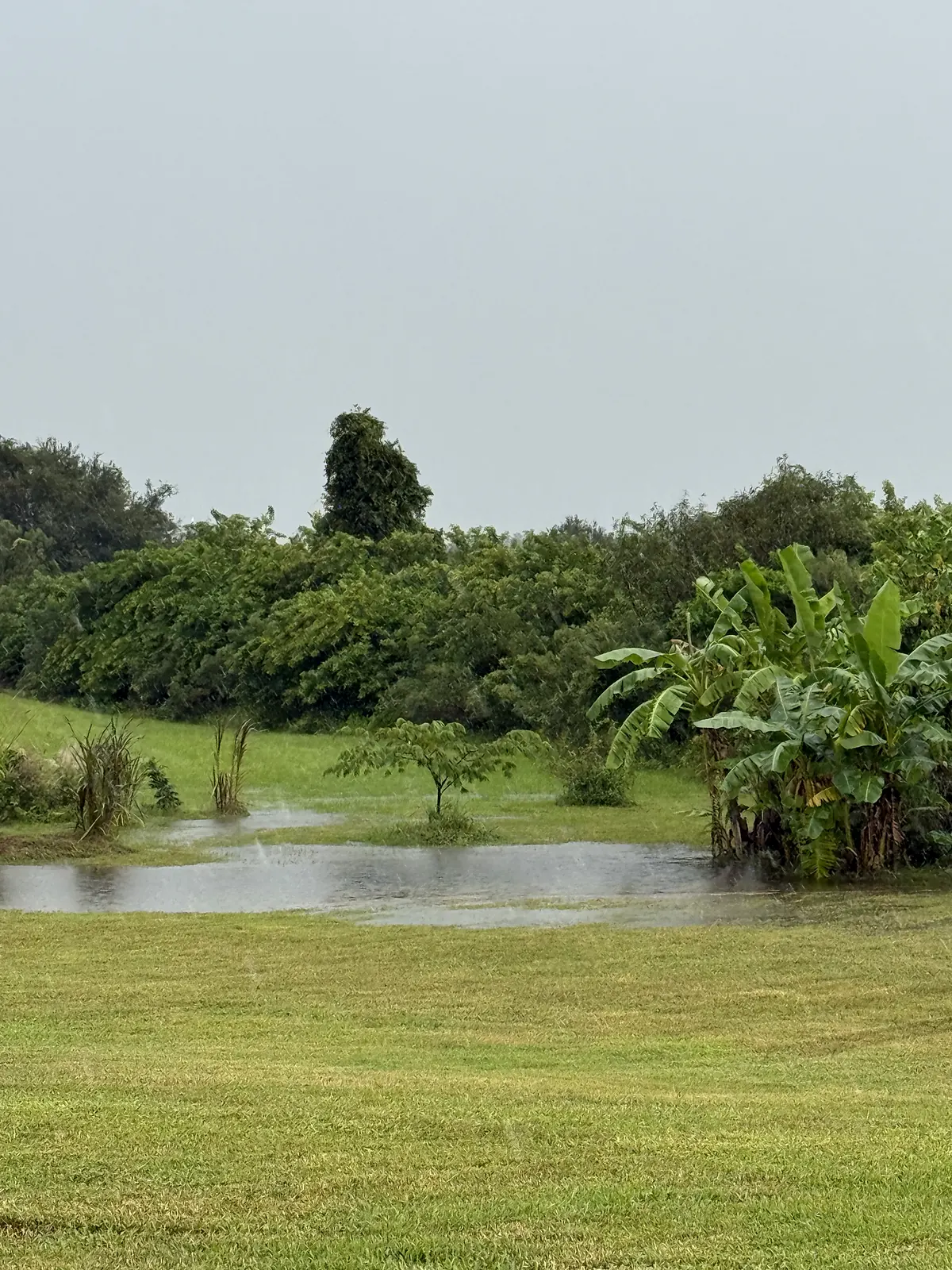 Bananas earning their keep in a wet low spot, where most fruit trees would sulk.
Green or ripe: two different foods
Most people only ever think of a banana as a sweet snack, which cuts the plant's usefulness in half. Picked and cooked green, a banana is a starchy vegetable. Boil it, fry it, roast it, put it in a stew: it behaves more like a potato than like fruit, and it is filling in a way the ripe version is not.
Let the same fruit sit until it is soft and sweet and you have the snack everybody already knows, somewhere between sweet and savory depending on the variety. Cooking types are at their best green, the dessert types at their best ripe, and the middle-ground varieties like Orinoco and Namwah are genuinely good either way. When a whole bunch comes ripe at once, which it always does, that flexibility is what keeps you from giving most of it away.
Where to put them
- The wet spot. Bananas want more water than almost anything else in a Florida food forest. A low corner that stays damp, the overflow from a downspout or the edge of a swale is where they thrive and where a mango would rot.
- Full sun, with some shelter. They need the sun to fruit well, but a fence line, a building or an existing canopy on the windward side pays for itself in storm season.
- In a clump, not a line of singles. Grouped plants shelter each other, hold humidity and look intentional.
- Not against the house. They get big, they shed constantly, and the roots want room. Give them a few feet.
Cold, wind and the honest caveats
Bananas are herbaceous, so a frost burns the leaves back. That is usually survivable: the corm underground is what matters, and the plant regrows. What a freeze costs you is time, because a stalk that was close to fruiting may be set back or lost. North of Fort Myers we do not plant cold-sensitive tropicals from mid-December through the end of January, bananas included. Winter is for planning; spring is for planting.
Wind is the other one. After Hurricane Milton the bananas in our yard were knocked around and came back fast, which is exactly the trade: they are not structurally tough the way a well-shaped tree is, but they regenerate quicker than anything else out there.
One stalk, one bunch
Whichever variety you choose, the care is the same, and it surprises people: each banana stalk fruits once and is then finished. You cut the bunch, cut the stalk down, and chop it around the pups coming up behind it. That is how a clump keeps producing year after year without you buying another plant. We wrote the whole routine up in how to harvest bananas and keep the pups producing.
Bananas also pair naturally with the other fast plants that carry a young food forest: see support plants that fruit while you wait.
Common questions
What is the best banana variety for Florida?
For most Florida yards a short variety is the best first choice: Dwarf Cavendish, Dwarf Namwah, Raja Puri or Dwarf Orinoco. They handle wind, fit a normal lot and fruit reliably.
Which bananas are the most cold-tolerant in Florida?
Dwarf Orinoco and Raja Puri are among the more cold-hardy types, and Dwarf Cavendish is reasonably tolerant for a dessert banana. A frost burns the leaves, but an established plant usually regrows from the corm.
How long does it take a banana to fruit in Florida?
A healthy banana can produce in roughly the first year, which makes it one of the fastest fruits you can plant. A bigger plant at install fruits sooner than a small pup.
Do bananas need a lot of water?
Yes. Bananas want more water than most food forest plants, so a damp low spot, a swale edge or a downspout overflow is an ideal place for them.
How many banana varieties should I plant?
Two or three is a good start: one reliable dwarf for steady fruit, one for flavor like Ice Cream or Apple, and a cooking type if your household cooks.
Read: how to harvest bananas and keep the pups producing
Can you cook green bananas?
Yes. Picked and cooked green, a banana is a starchy vegetable you can boil, fry or roast, much like a potato. Left to ripen, the same fruit becomes a sweet snack.
Cold-tolerance and planting guidance in this article follows UF/IFAS Extension recommendations for Florida dooryard fruit.