Short answer: let your kids choose the fruit, help find the spot, plant it, and eat from it. When children pick the trees and harvest the fruit themselves, the yard becomes theirs, and the food forest becomes something your family does together, not another chore.
It started with a bag of Skittles
When we moved to Florida I was a brand-new stepdad, and I wanted something our boys and I could build together. So we opened a bag of tropical Skittles, poured them on the table, and I asked my son to pick his favorite flavors.
He lined them up. Then I threw the whole bag in the garbage.
We looked at what he'd picked: coconut, tangerine, mango, papaya. I told him those flavors are copies of real fruit, and that we could grow the real thing right in our yard. That week we went to the nursery and came home with the trees he chose.
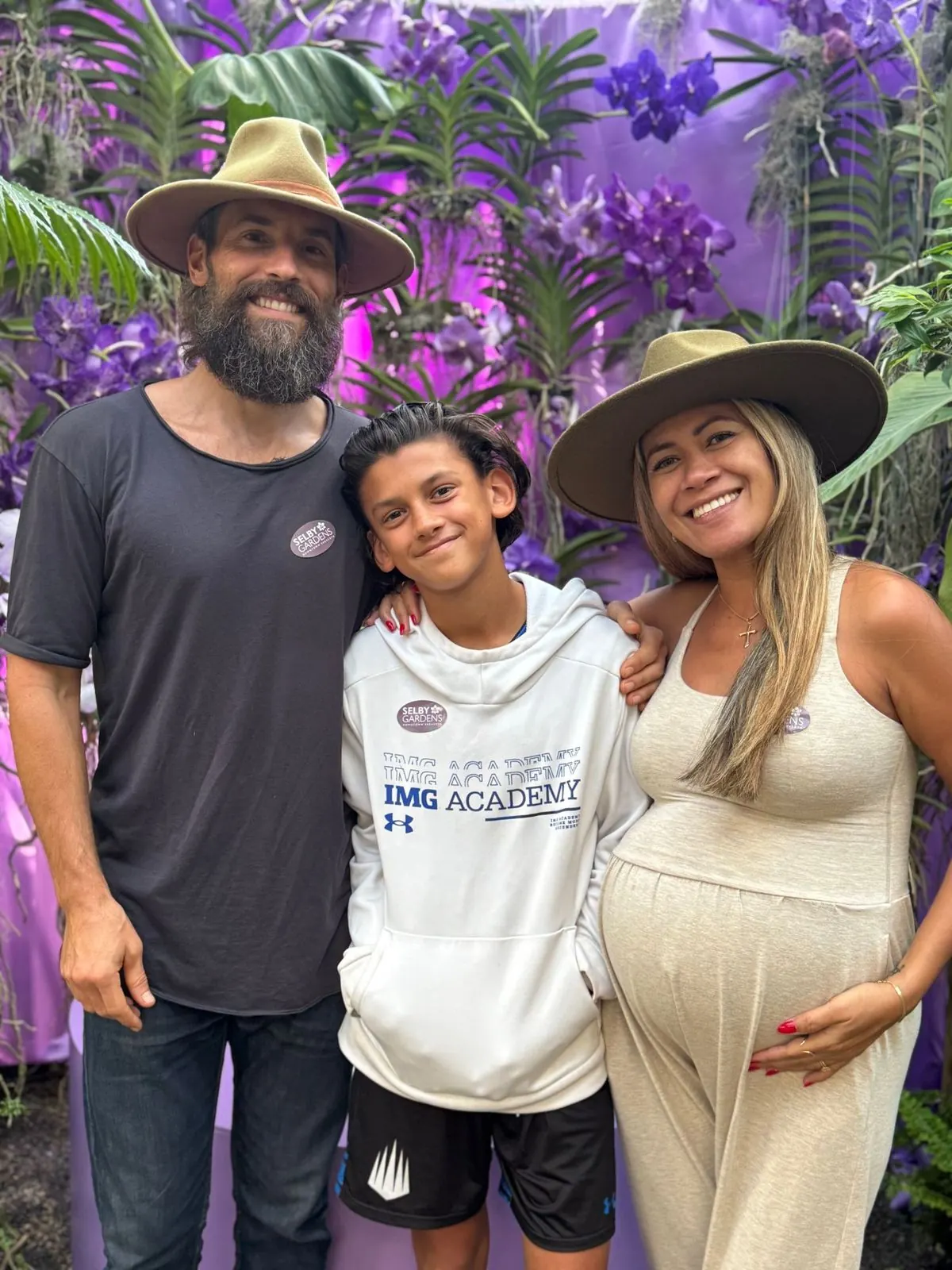
What the boys did (and still do)
- Picked the trees. Every tree in the yard started as a kid's choice, so every harvest is somebody's tree.
- Found the spots. We walked the yard together looking for sun and high ground. They learned why a mango goes in one place and a banana in another.
- Planted them. They dug holes, spread compost and carried mulch.
- Propagated. They learned to root cuttings and start seeds, then watched new plants come up.
- Built the soil. Chop-and-drop is perfect kid work: cut the support plants, lay the leaves around the trees, and watch the sand turn dark over the years.
- Ate the fruit, and shared it. Before long they were inviting friends over to pick papayas and taste fruit their friends had never seen.
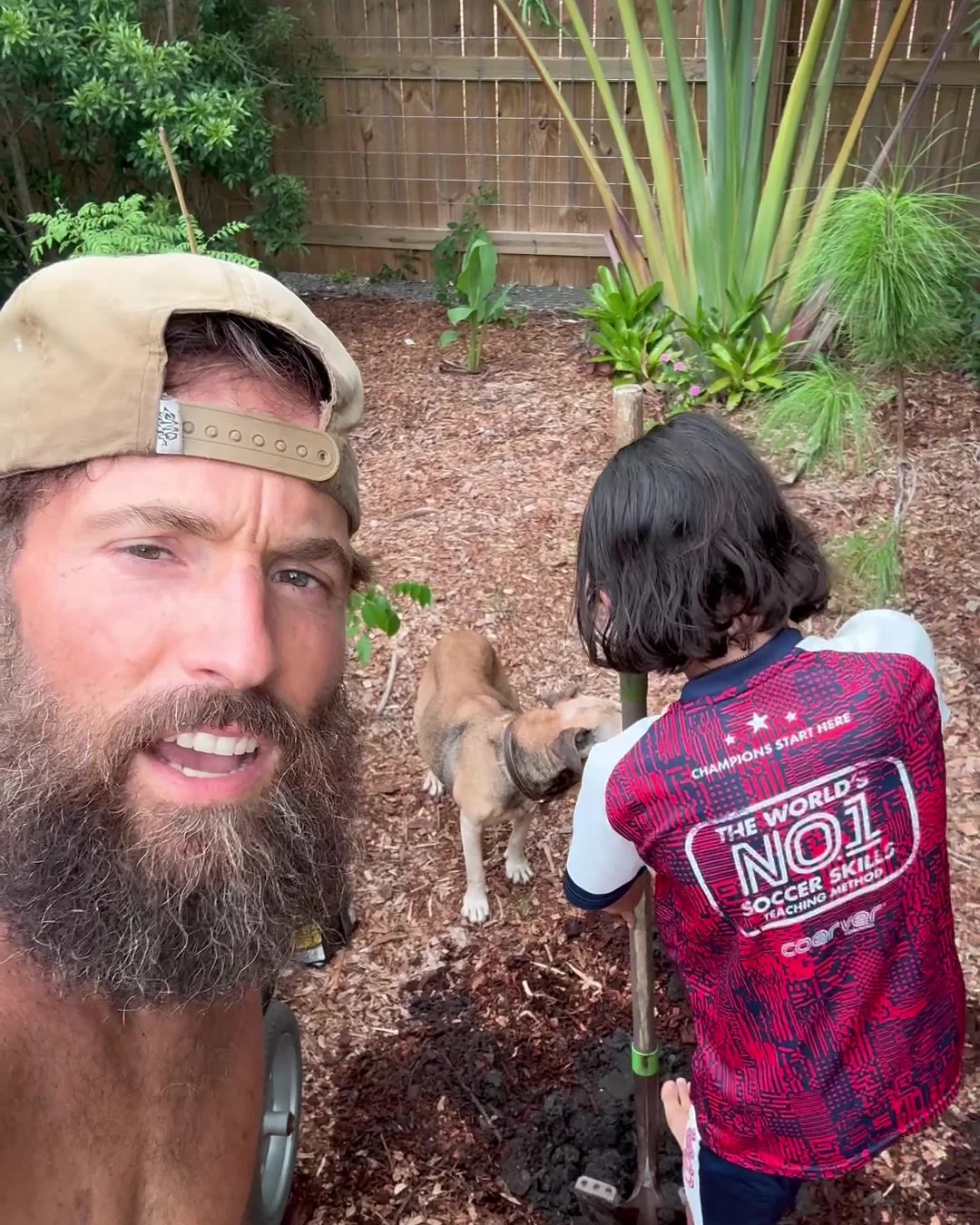
One of our favorite days: my son and I planting a starfruit tree. He dug the hole, we mixed in compost, and he tasted a ripe starfruit while we worked so he knew exactly what he was planting.
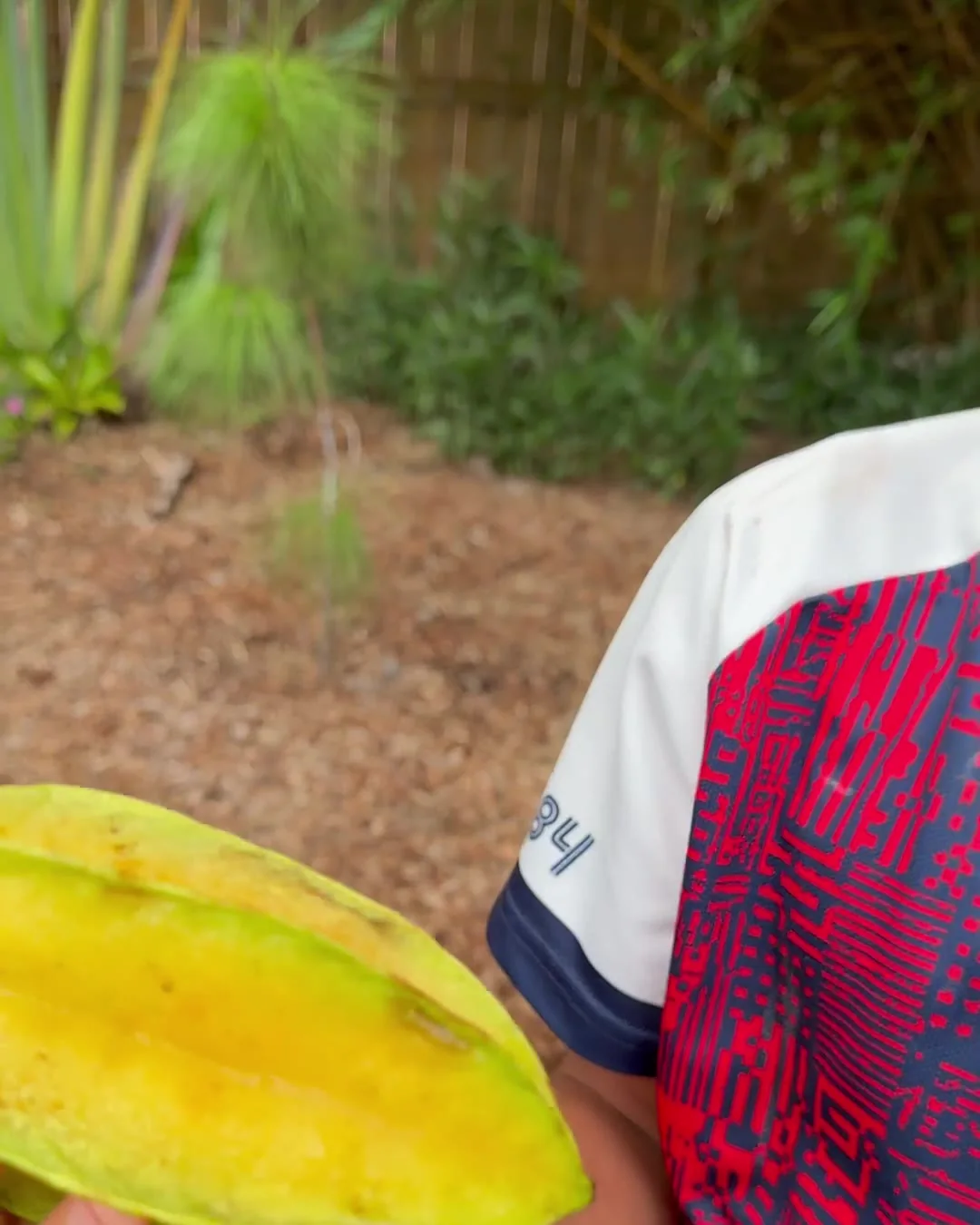
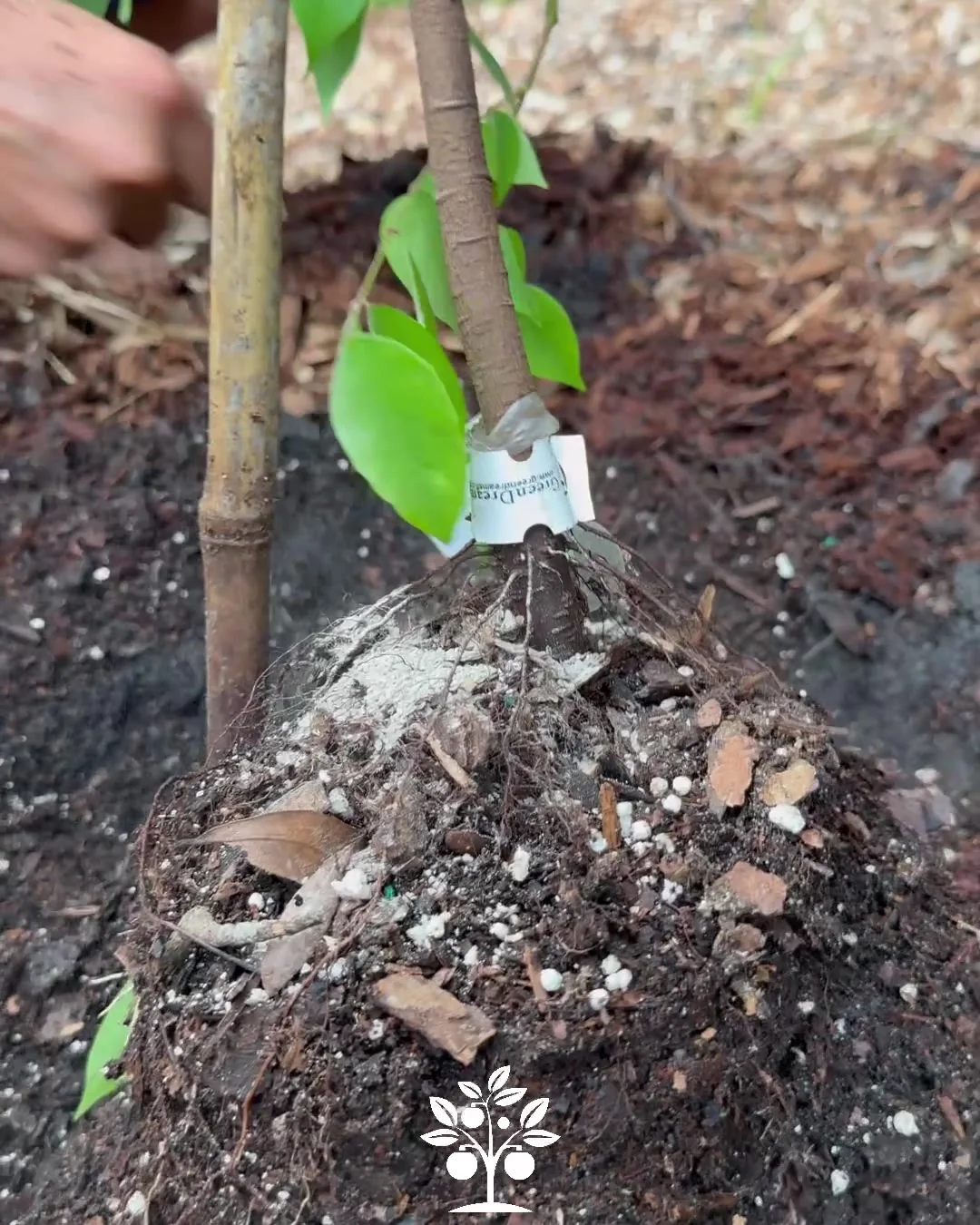 The finished planting: compost mixed in, mulch on top, ready to grow.
Watch: Planting our family Florida food forest: starfruit with my son · More on our YouTube channel
Why we grow our own
A big part of why we started was simple: we wanted to know exactly what our kids were eating. Real fruit, picked ripe, grown in living soil with nothing synthetic sprayed on it. When the boys reach for a snack in the yard, we know where it came from.
Watch: Real food over red dye: healthier families start here · More on our YouTube channel
Why it works
Kids don't care about plant names at first. They care about flavor, ownership and getting dirty. A food forest gives them all three, plus something screens can't: watching something they planted grow taller than they are, then feed them. For our family it has been a way to bond, to slow down, and to show our boys the goodness of creation up close. "The LORD God took the man and put him in the garden of Eden to work it and keep it" (Genesis 2:15).
Watch: Grow food, faith and family memories: planting jackfruit with our kids · More on our YouTube channel
Ideas by age
- Little ones: taste tests, watering, finding ripe fruit by color and smell, spreading mulch with small hands.
- School age: picking a tree to "own," measuring its growth, planting seeds and cuttings, chop-and-drop.
- Teens: mapping the yard for sun and water, grafting and propagation, hosting harvest days for friends.
We made plenty of mistakes
We made a lot of mistakes along the way. Florida-Friendly Landscaping comes down to "right plant, right place," and we learned it the hard way:
- Too close to the house. Some trees went in where they'd outgrow the space against the walls.
- Wrong light. Some plants got too much shade, others too much sun.
- No mound. A few trees planted flat in low spots got waterlogged after summer rains and died.
- Straight into sand. Early on we skipped good compost and didn't build the soil first.
- In the walkway. One plant went where we walk every day, crowded the path, and had to be moved.
- Not enough water at first. We underwatered in the first month, before the roots were established.
That is exactly why we wrote the Florida Family Fruit Guide. It's built so families can skip the guesswork. Kids can learn to identify each plant, help decide where it goes, run taste tests, and complete Fruit Hunter missions as the yard grows. It covers 12 family-friendly foundation fruits plus 13 rare adventure fruits, rated for your part of Florida, so you can start a kids' food forest that fits your yard.
And when your family is ready to go bigger, with a whole yard of fruit, shade and space to play, we design and plant it with you.
Common questions
How do I get my kids interested in gardening?
Let them choose the fruit, plant it, and harvest it themselves. Ownership and flavor matter more to kids than plant names. Taste tests and picking days make it a family habit.
What fruit trees are good for kids in Florida?
Fast, forgiving plants like papaya, banana, mulberry, fig and Barbados cherry give kids a harvest quickly, often in the first year or two.
What are common mistakes when planting fruit trees with kids?
The big ones are the wrong spot (too close to the house, in a walkway, or in the wrong light), planting flat where water collects, skipping compost, and underwatering the first month. Plan the spot together first.
Is a food forest safe for children?
Choose child-safe edible plants, skip synthetic sprays, and teach kids to taste only what an adult has identified. We grow our food forests without synthetic pesticides.
Cold-tolerance and planting guidance in this article follows UF/IFAS Extension recommendations for Florida dooryard fruit.