Short answer: a food forest is a garden designed to work like a young woodland, except most of what grows in it feeds you. Instead of a lawn with a few fruit trees, you plant fruit trees, shrubs, herbs, vines, groundcovers and Florida natives together in layers. Each plant shades, feeds or protects the others. Once established, it needs far less mowing, spraying and watering than a typical yard.
The seven layers
- Canopy: the tallest fruit trees, such as mango or avocado.
- Understory: smaller fruit trees such as citrus, loquat or sugar apple.
- Shrubs: Barbados cherry, blueberry where it fits, native firebush for pollinators.
- Herbaceous: bananas, cannas, turmeric, ginger, lemongrass and herbs.
- Groundcover: sweet potato, perennial peanut and living mulches that shade the soil.
- Vines: passion fruit and dragon fruit on a trellis, fence or support tree.
- Roots: cassava, sweet potato and other roots that loosen the soil.
Not every yard needs all seven. A small lot might start with three plants. A large property might have every layer plus a pond. The idea is the same at any size: use the vertical space and let the plants work together.
Watch: Bananas are going extinct, but not in this Florida food forest · More on our YouTube channel
Why food forests work so well in Florida
Florida lawns fight the climate. Sandy soil drains too fast, summer rain washes nutrients away and grass needs constant water, mowing and chemicals. A food forest works with those conditions instead. Mulch and leaf drop turn sand into living soil. The canopy shades the ground through the summer. Diverse plants keep pests in check without synthetic sprays. Our own practice is compost teas and companion planting.
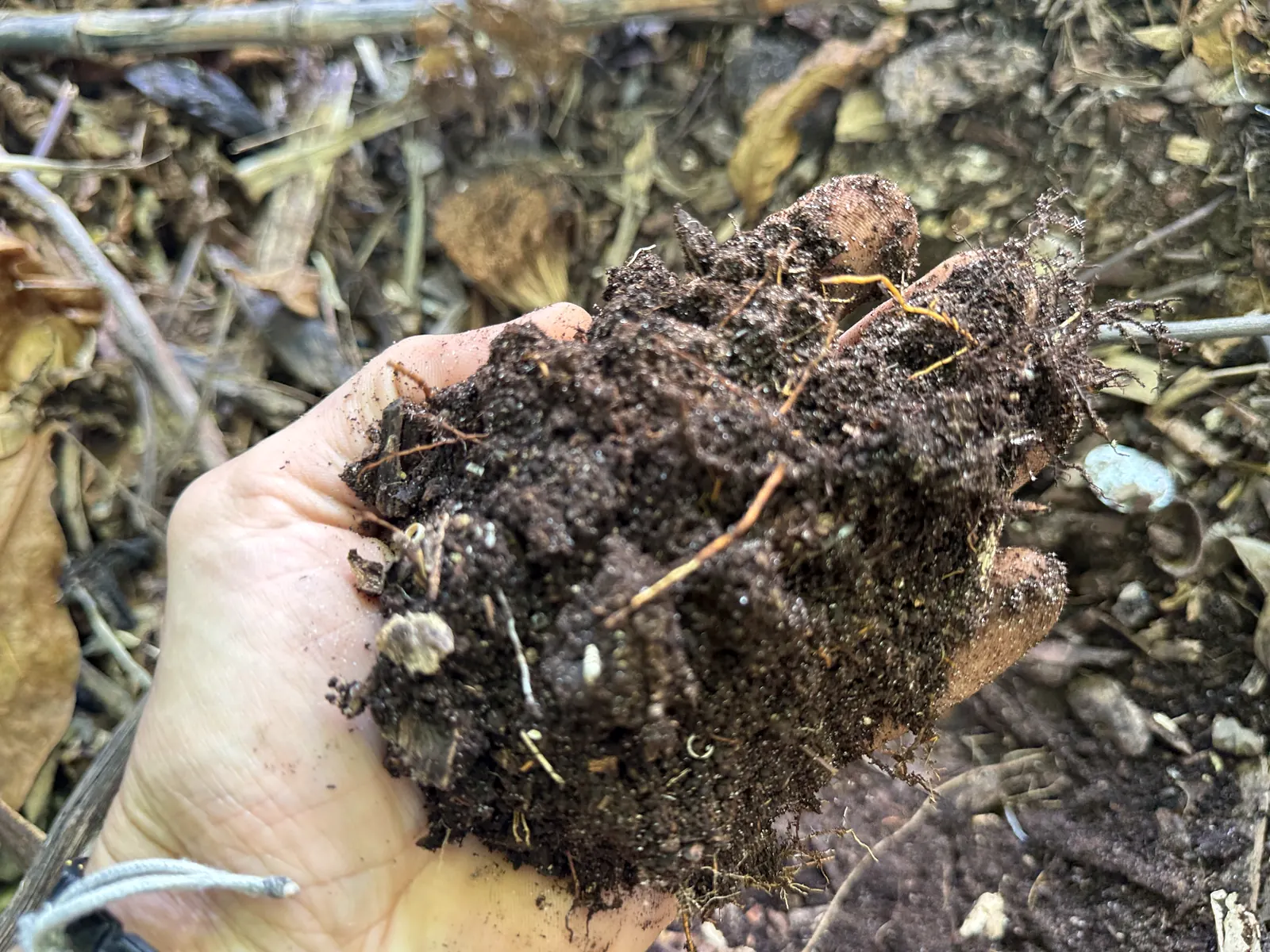 The same Bradenton soil that was bare sand in 2022.
Food forest vs orchard vs edible landscape
An orchard is rows of one or two fruit trees in grass. An edible landscape is attractive planting where some plants are edible. A food forest is a whole system, layered and self-supporting. We explain the differences in detail in Food Forest vs Orchard vs Edible Landscape.
How long until it produces?
Fast plants like papaya, banana and mulberry can produce in the first year, and figs, pomegranate, Barbados cherry and strawberry tree (Jamaican cherry) often fruit within the first year too. Larger fruit trees like mango and avocado generally take a few years. Size matters: the bigger the pot and the tree at planting, the sooner it fruits. A larger tree costs more up front, but it buys you time. A food forest is designed so you are harvesting something from season one while the slower canopy grows in. See real timelines in our Bradenton and Sarasota case studies.
Where to start
If you want to plant it yourself, start with three plants and the Florida Family Fruit Guide. If you want it designed and installed, see our services or book a free Discovery Call below.
Common questions
What is a food forest?
A food forest is a layered planting of fruit trees, shrubs, herbs, vines, groundcovers and native plants designed to work like a woodland, producing food with far less maintenance than a lawn.
Can you grow a food forest in Florida?
Yes. Central and South Florida's long growing season makes it one of the best places in the country for food forests, as long as the design handles sandy soil, summer rain, dry springs, wind and the occasional freeze.
How long does a food forest take to produce fruit?
Fast plants like papaya, banana and mulberry can produce in the first year, and figs, pomegranate, Barbados cherry and strawberry tree (Jamaican cherry) often fruit within the first year too. Larger fruit trees like mango and avocado generally take a few years. Size matters: the bigger the pot and the tree at planting, the sooner it fruits. A larger tree costs more up front, but it buys you time.
How big does a food forest need to be?
There is no minimum. A small yard can start with three well-chosen plants and grow from there. The layered approach works on a suburban lot or a multi-acre property.
Cold-tolerance and planting guidance in this article follows UF/IFAS Extension recommendations for Florida dooryard fruit.