Short answer: the students at Prosper Noggin in Okeechobee, Florida designed their own food forest, then planted it in one long, rainy day with their parents, little brothers and sisters, the sheriff's office, the fire department and local businesses. Six hours. Mud to the elbows. Almost no phones. It's what school should feel like.
It started with two teachers who care
Melinda and Danielle found our videos online and called us. They run Prosper Noggin, a Christ-centered homeschool support program in Okeechobee with a five-to-one adult-to-student ratio, built on one belief: education should prepare students for real life. Character. Responsibility. Curiosity. Faith. Healthy living. Hands-on skills.
That's a food forest. So we said yes.
Let's be honest about where our kids are
As parents, we see the cracks. Screens are raising a generation. Food comes in bags with ingredient lists you can't pronounce. Most kids couldn't tell you what a mango tree looks like, let alone plant one. The system as a whole isn't preparing them for the world they're inheriting.
We can't control everything out there. We can control what we teach them: how to work with their hands, how to care for the land, how to feed a community, and how to treat their bodies like the temple they are. Children are the future. Somebody has to steward them like it.
The kids designed it
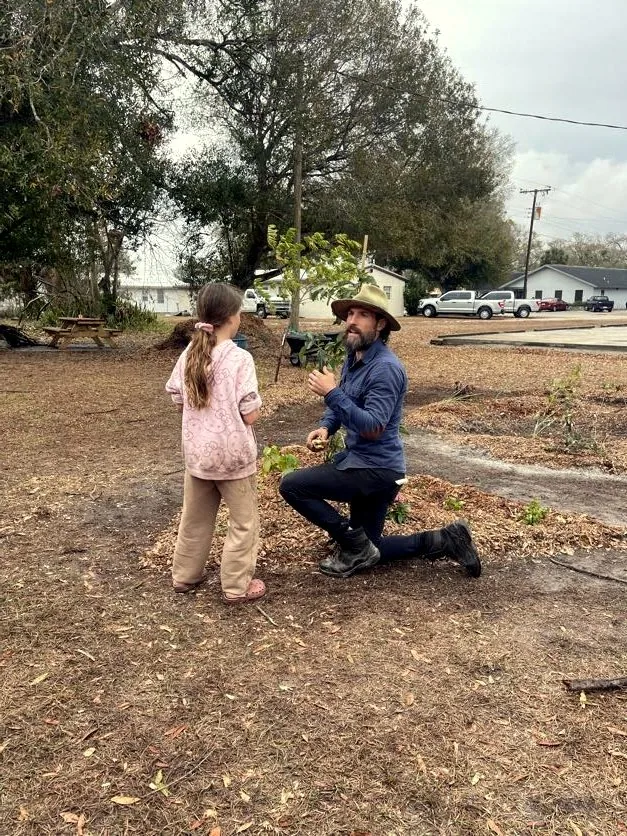
We started on a video call. We explained how a food forest works: canopy trees, support plants, pollinators, all feeding each other. Then we sent the students out to find the spot themselves. Sun. Drainage. Room to grow. A place people walk past every day.
They came back with several hand-drawn designs. We picked one together, and we sourced every plant to match it.
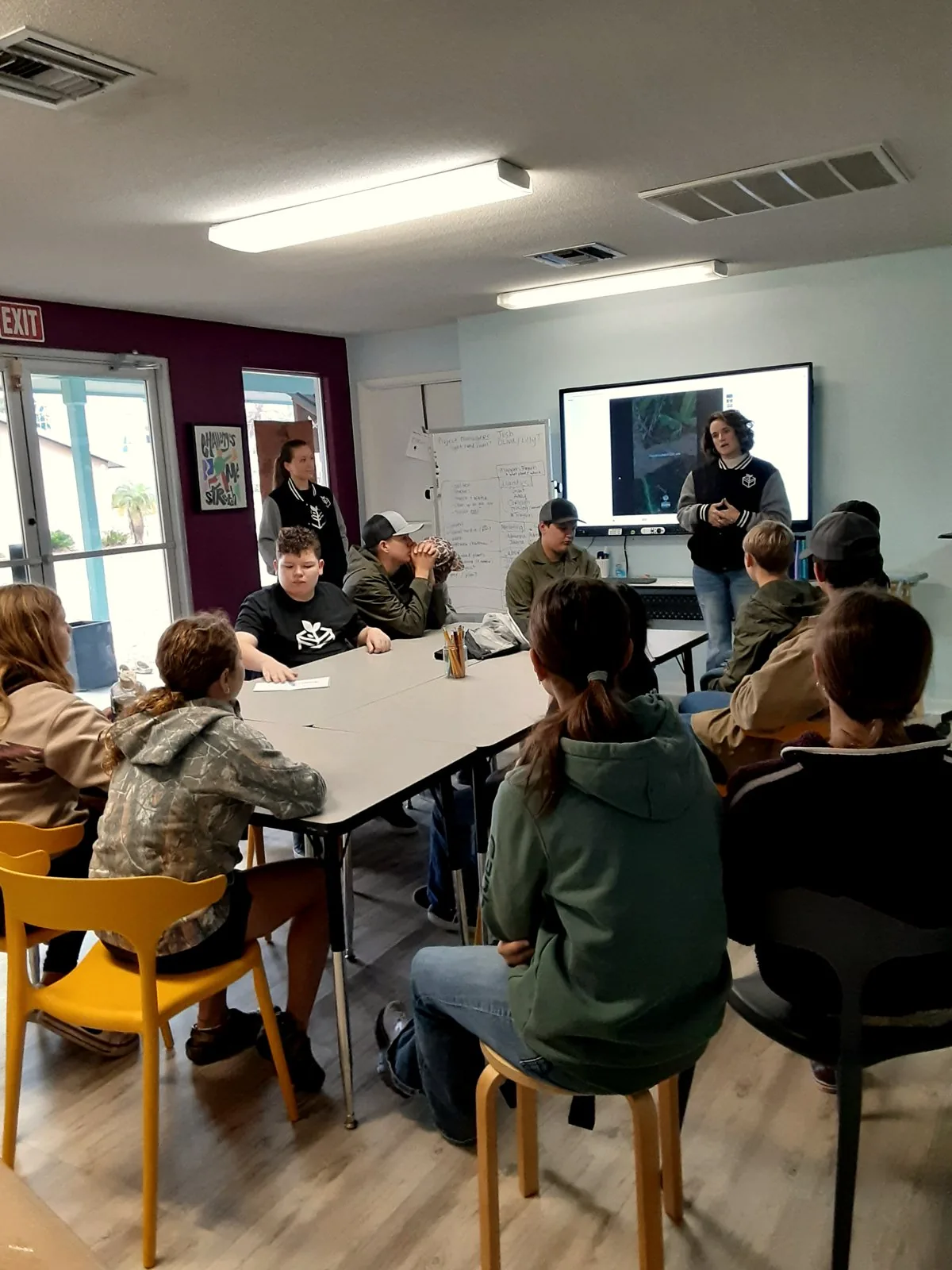
These kids already knew things most adults don't. Soil. Where food comes from. Why community matters. A lot of them come from Okeechobee ranching families. They still work outside, raise animals and grow food, and they want to hold on to that land and that way of life.
Install day: prayer, rain and a job for every kid
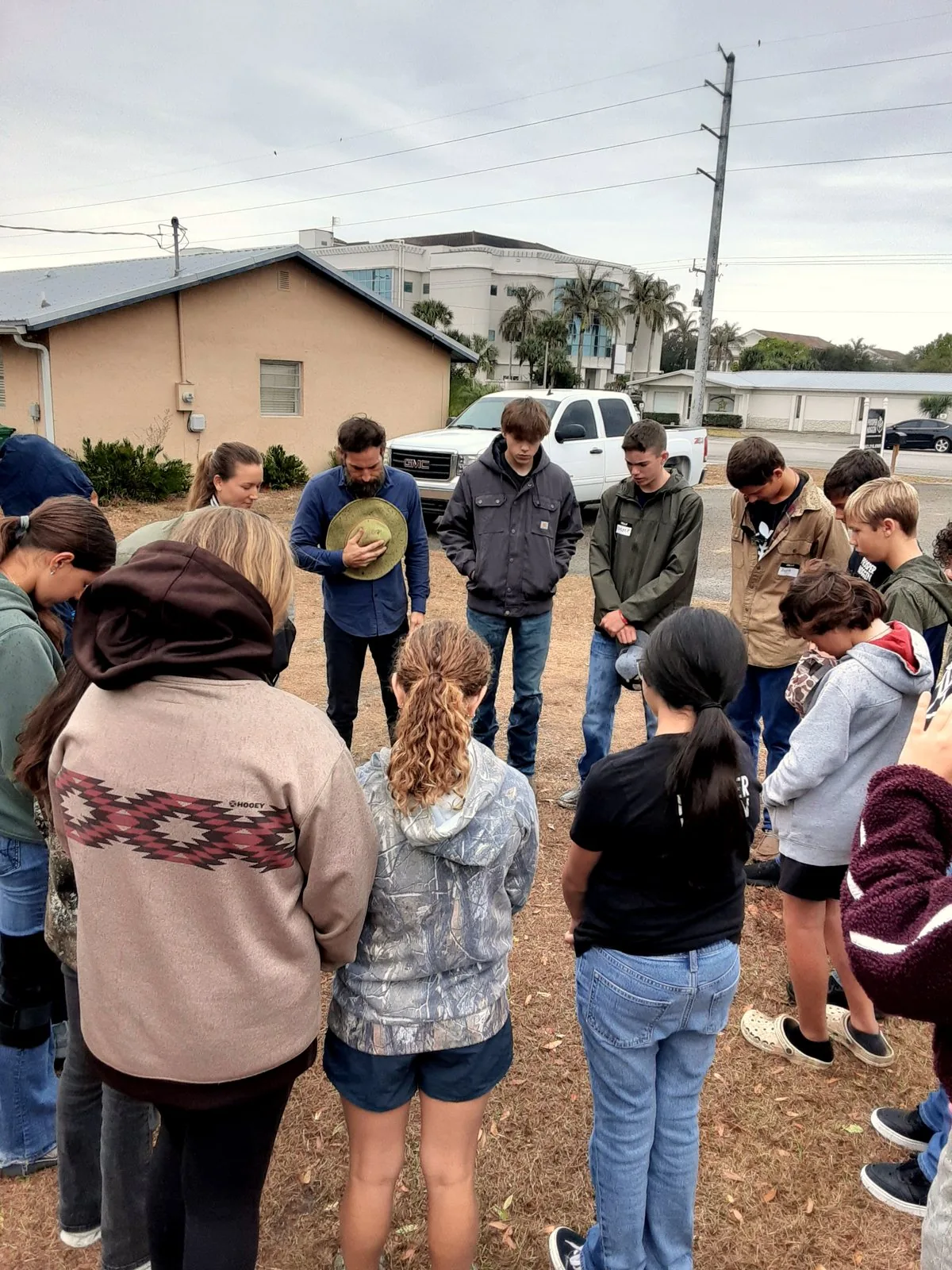
We drove out to Okeechobee, circled up and prayed. We talked about why we grow food and what this place could become. Then the sky opened up.
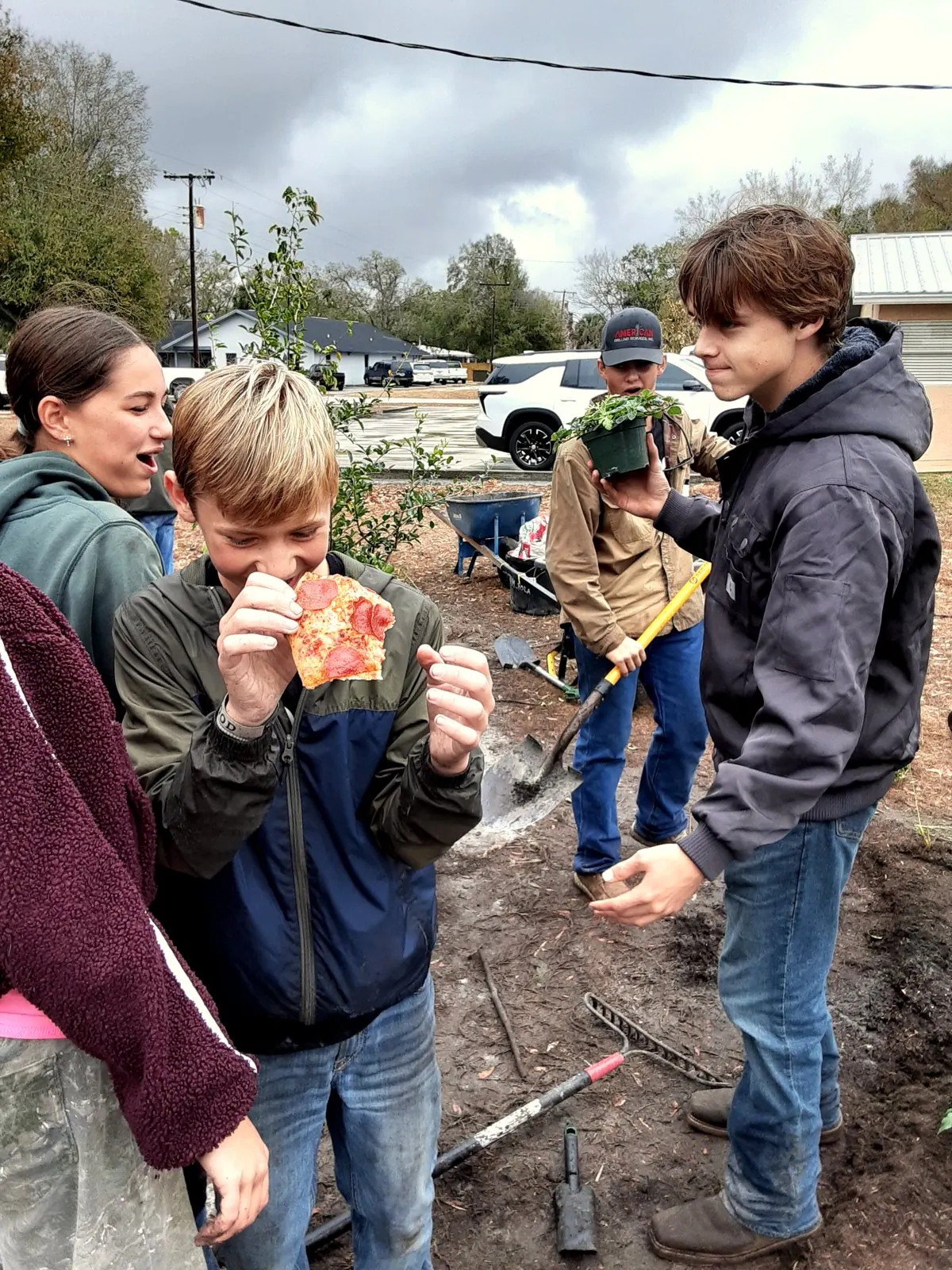
Rain sideways. Florida sand turning to black paste under the compost. Nobody went inside. We changed parts of the design on the fly, and the kids led a lot of those calls. Everyone had a role:
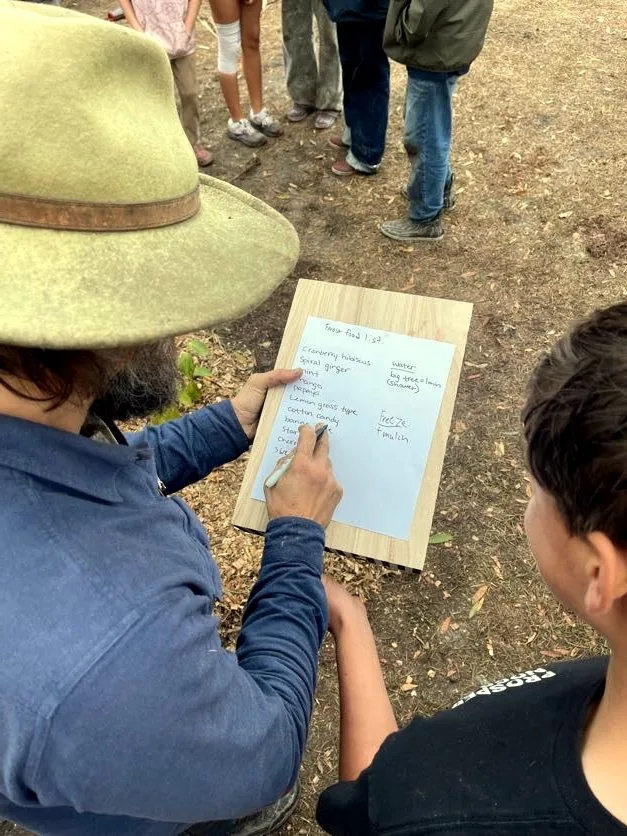
- Inventory: one student ran the plant list like a job-site foreman.
- Diggers: a crew hit every hole for the fruit trees, support trees and pollinators.
- Project managers: kept the crews moving and the plan on track.
- Designers: checked every plant against the plan. When something didn't fit, we stopped and asked, "Does this really work here, or should we shift it?"
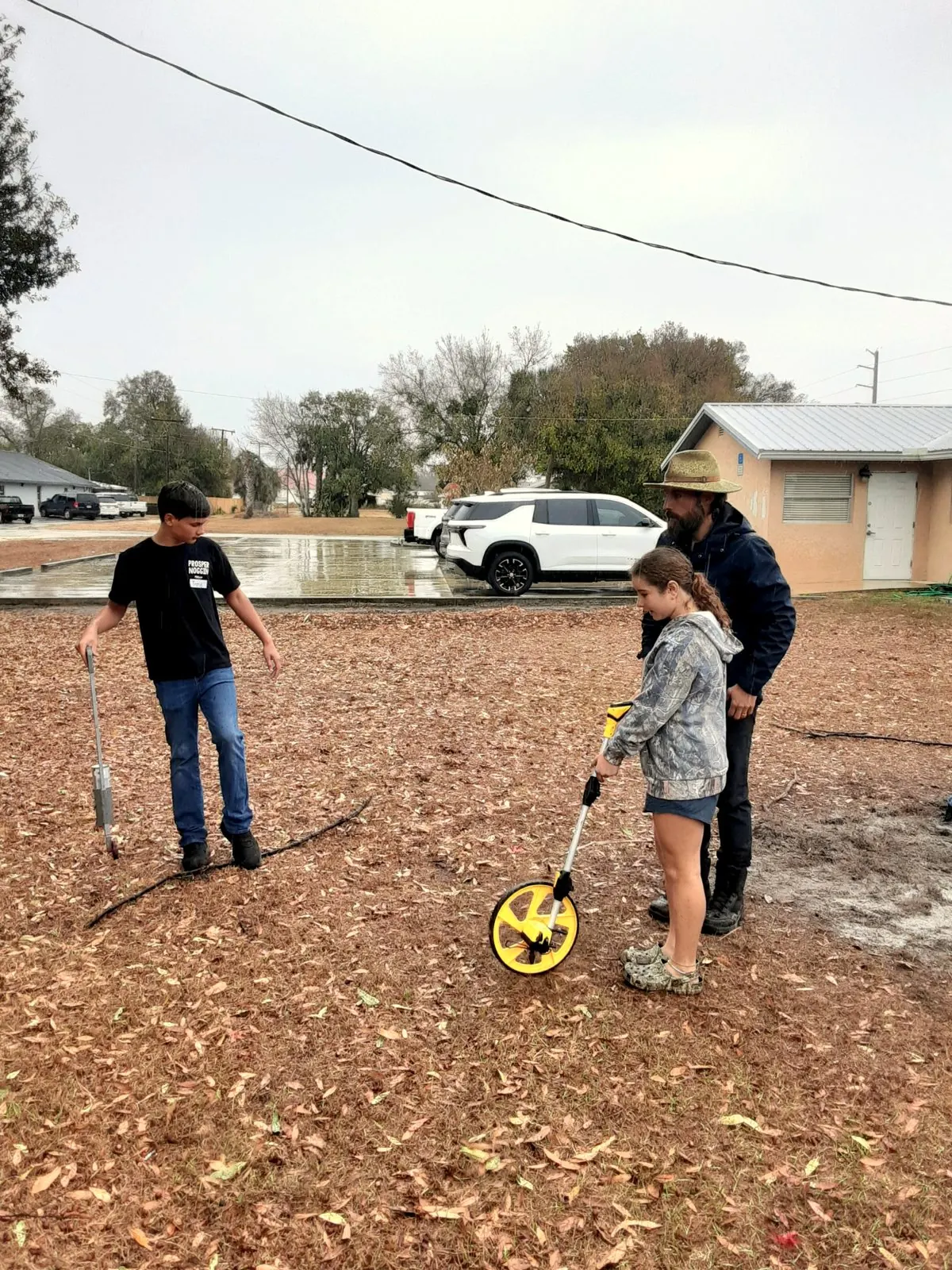 Students measuring out the beds before the first hole.
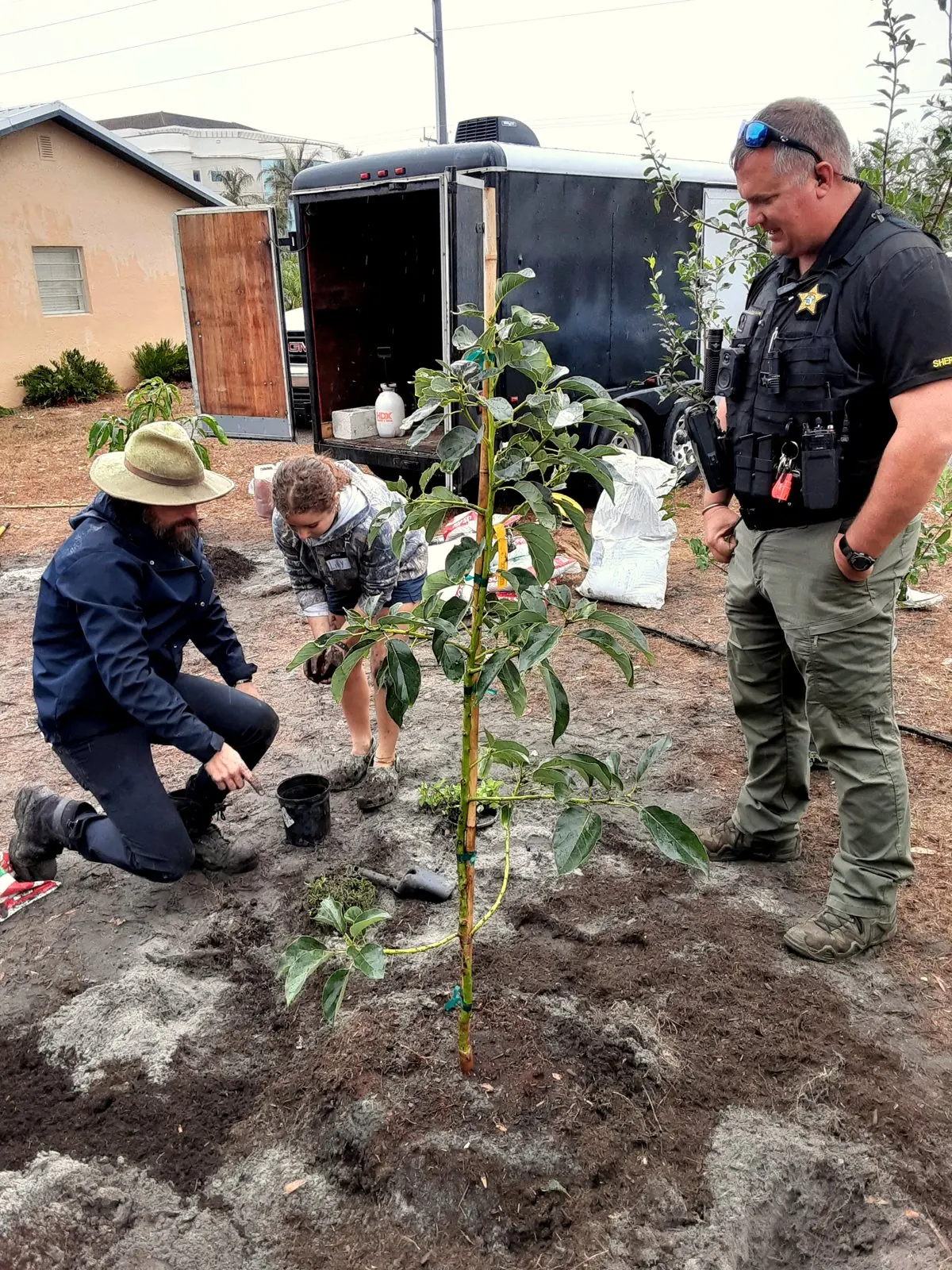
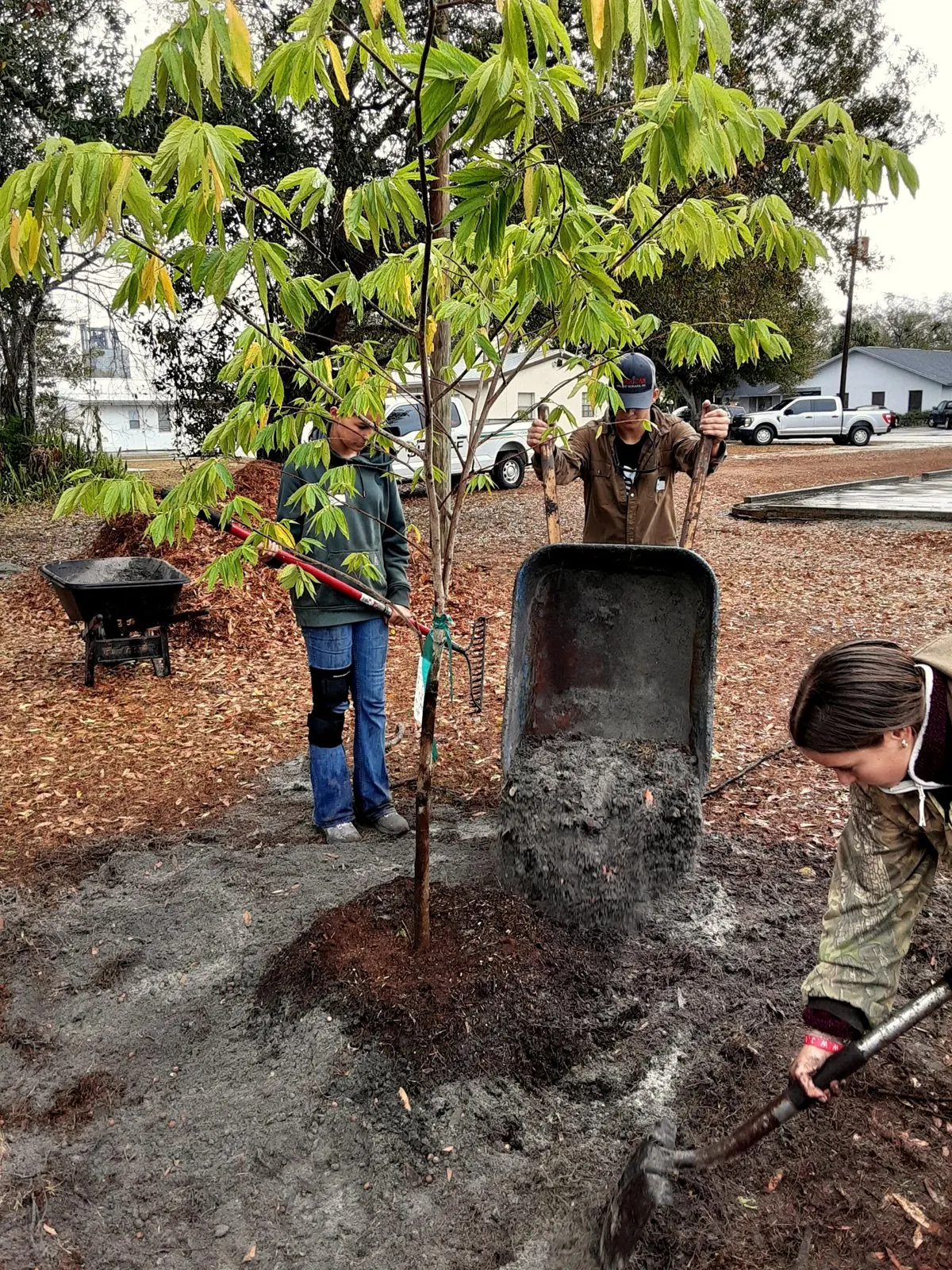 The Oro Negro avocado goes in the ground.
No phones. Just kids being kids.
Here's what hit us most. We didn't see cell phones. One student was in charge of media. Everyone else had their hands in the dirt. The phones only came out at the very end, to take pictures of what they'd planted.
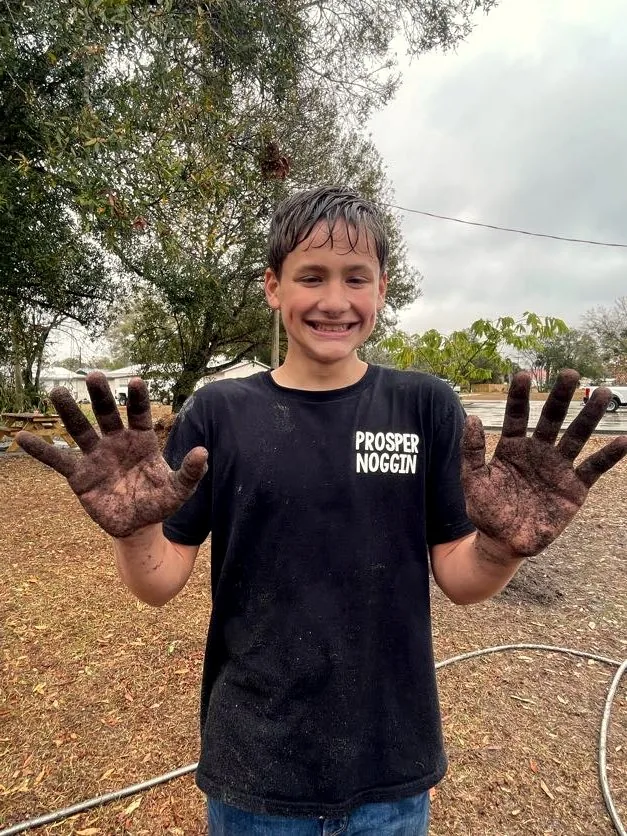
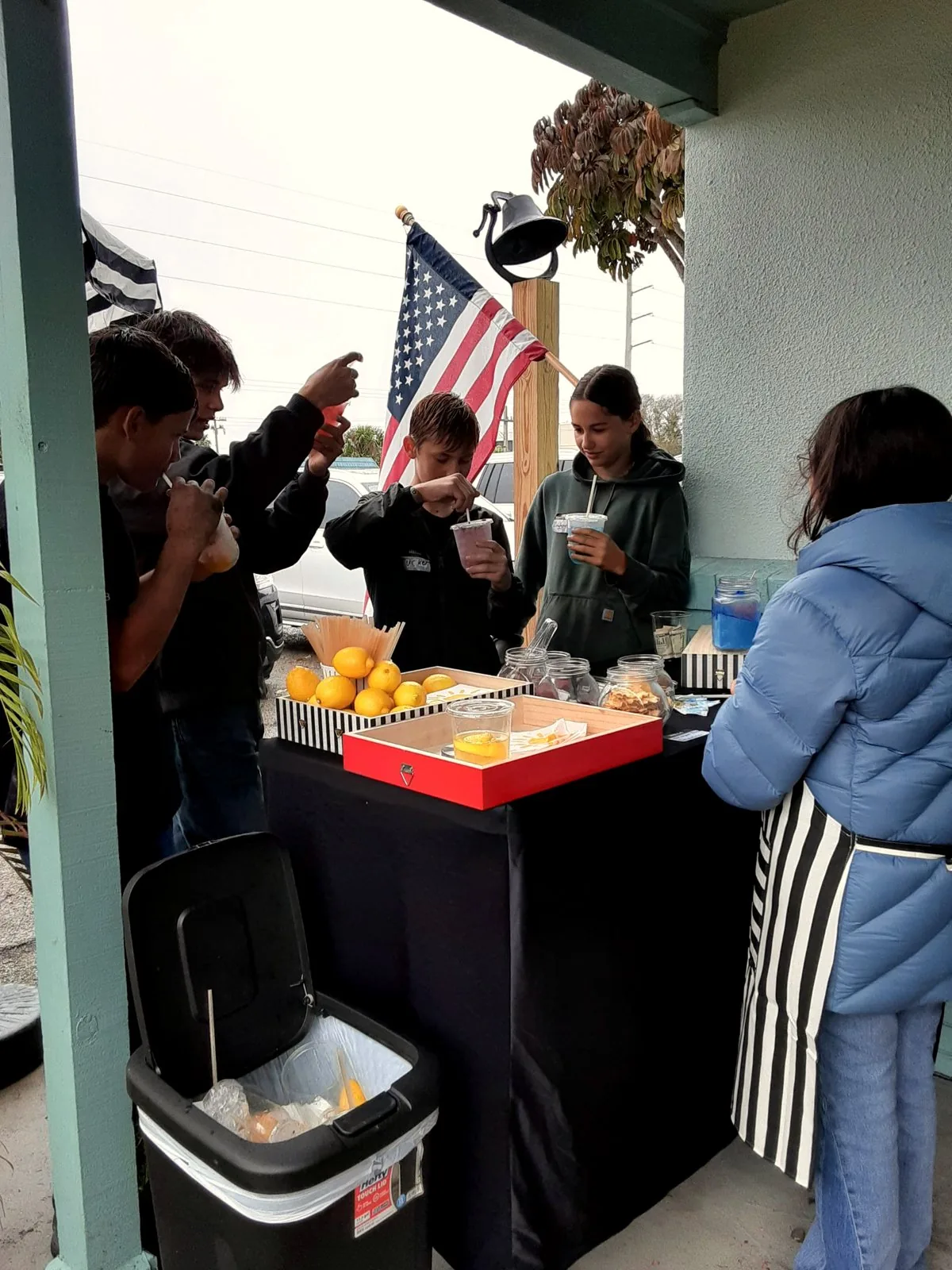
These kids knew the plants by name. They weren't afraid to get filthy. They tasted the fruit, made lemonade for the whole crew, and asked better questions than most adults. Honestly? It was refreshing.
A whole town showed up
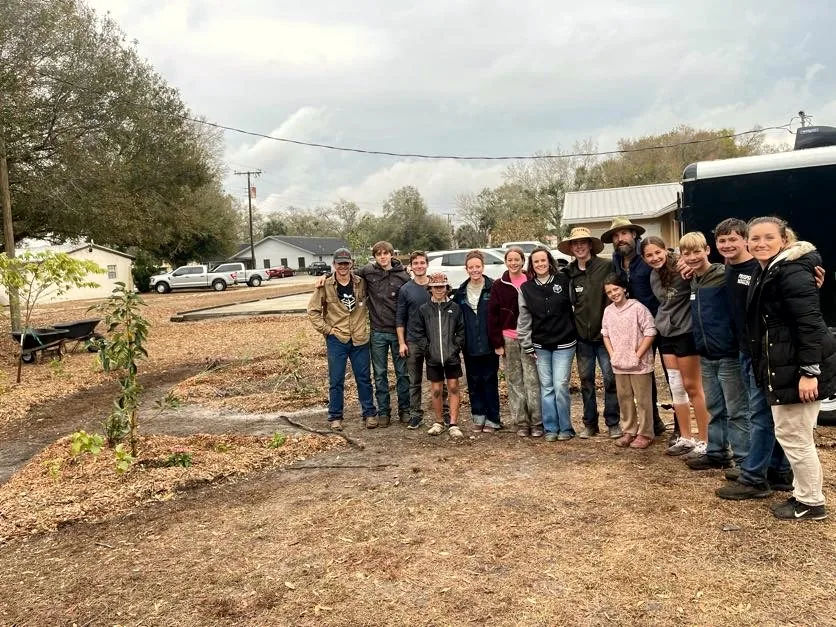
Parents came. Little brothers and sisters too. The sheriff's office came out. So did the fire department and local businesses. Everybody grabbed a tool. One family brought gifts, homemade jams and fresh sourdough. A ranching family brought meat for everyone.
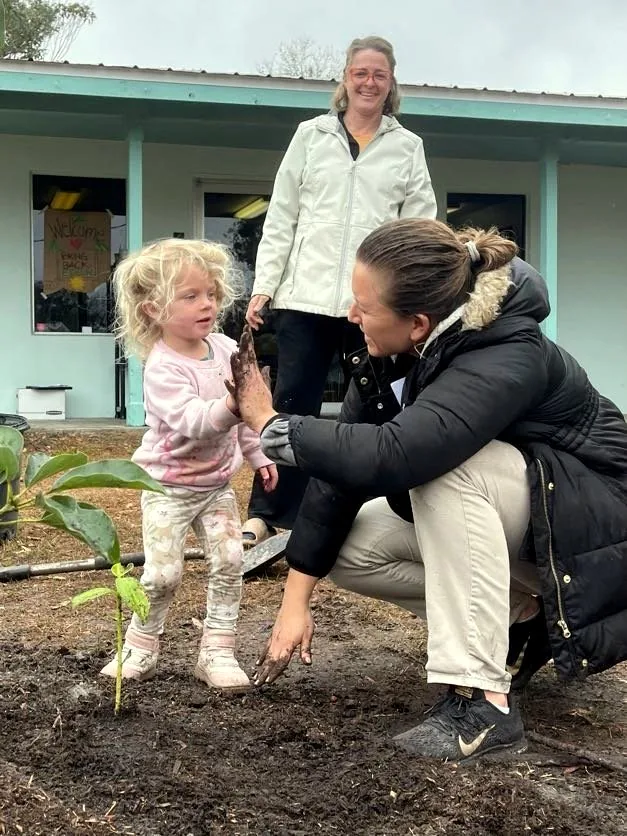 Never too young to plant.
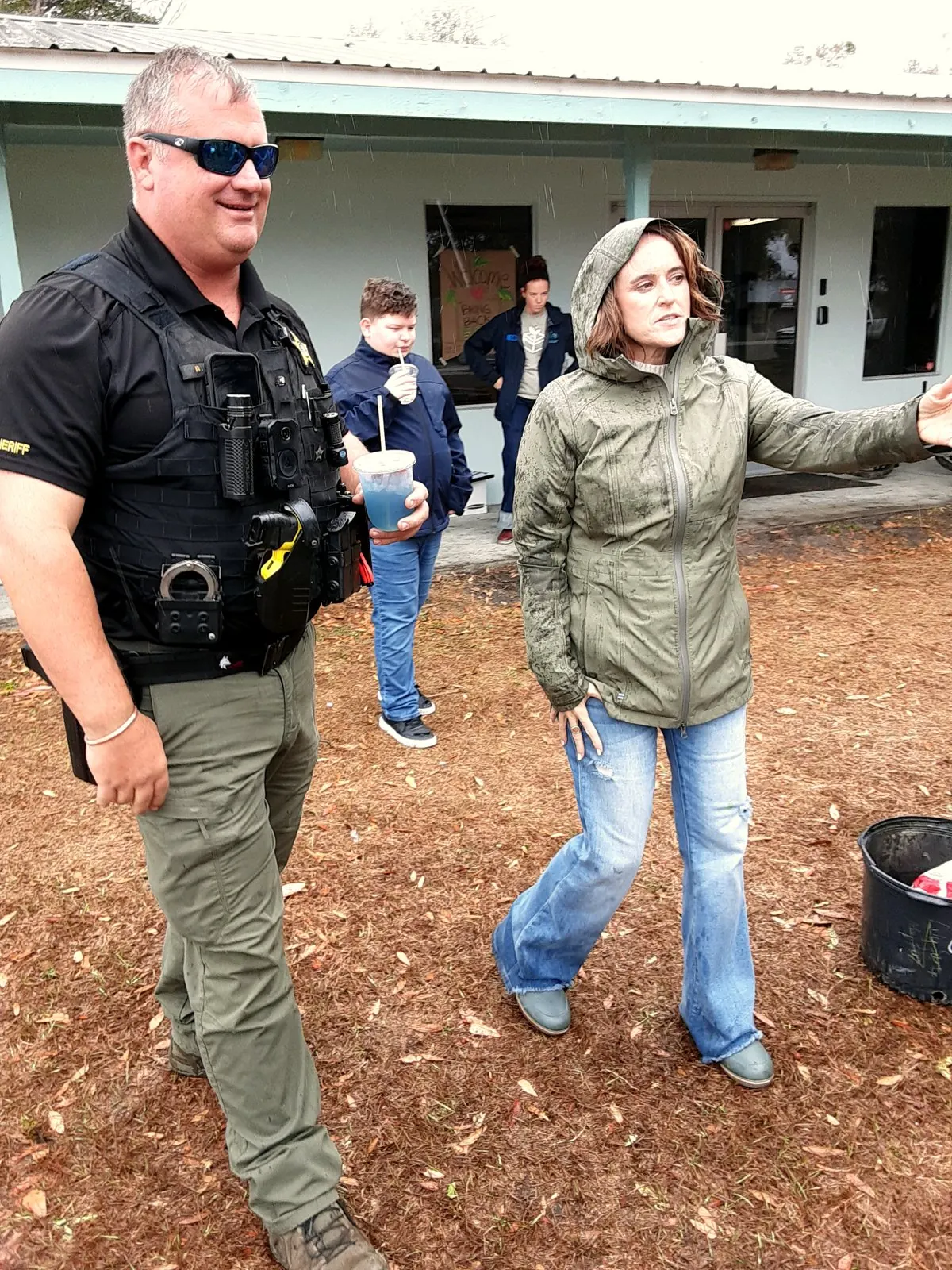
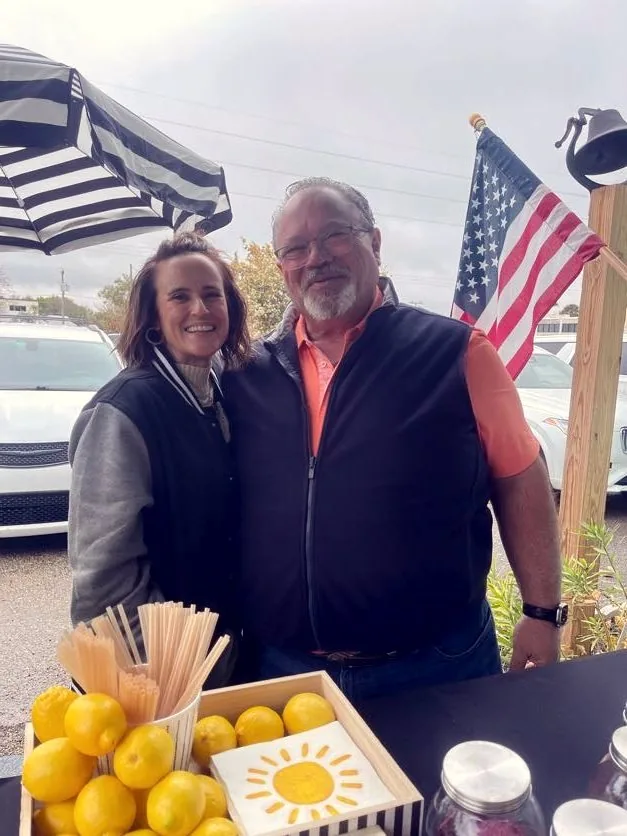 Neighbors came out to support the kids.
We were there about six hours. It felt like two. That's what happens when everyone has a purpose: design, prep, install, and now caring for it as it grows.
Two weeks later, they took it to the Capitol
About two weeks after the build, the students traveled to the Florida Capitol in Tallahassee and held a mock debate on why growing your own food matters and why clean, organically grown food is worth standing up for. When kids own the work, they carry it further than you'd ever expect.
This isn't just for homeschool. It's for every school.
Prosper Noggin is a homeschool program, but nothing about this day required that. A food forest works at a public school just as well: on an unused lawn, beside the cafeteria, next to the athletic fields, or wrapped around raised beds that sit empty every summer. It's an outdoor classroom for science, nutrition and stewardship, and it puts every kid's hands in the soil, not just a few.
"Train up a child in the way he should go; even when he is old he will not depart from it." Proverbs 22:6
Bring this to your school
Parents, teachers and principals: public, private, charter or homeschool, we'll help your students design and plant their own food forest, from Tampa to Naples and Okeechobee.
Common questions
Can students design their own school food forest?
Yes. At Prosper Noggin in Okeechobee, students chose the site, drafted several hand-drawn designs and picked the final plan, then planted it with Bring Back Eden in one day.
Can public schools have a food forest?
Yes. A food forest works at public, private, charter and homeschool settings: on unused lawn, by the cafeteria, near athletic fields or around existing raised beds, as an outdoor classroom for every student.
How long does it take to plant a school food forest?
A small school food forest can be planted in one full day with students, families and volunteers. The Prosper Noggin install took about six hours.
Where does Bring Back Eden build school food forests?
From Tampa Bay to Naples, including Sarasota, Bradenton, Fort Myers and Okeechobee, for public and private schools, homeschool programs and churches.
Cold-tolerance and planting guidance in this article follows UF/IFAS Extension recommendations for Florida dooryard fruit.