Short answer: Florida sand drains fast and holds almost nothing, so you build soil from the top down. Add compost, keep a deep layer of mulch, chop and drop biomass plants in place, and plant densely so roots fill the ground. Within a few years, grey sand can become dark soil that holds water and feeds fruit trees.
We did exactly this in our own Bradenton backyard, documented in our Bradenton case study. Here is the same ground in 2022 and 2026.
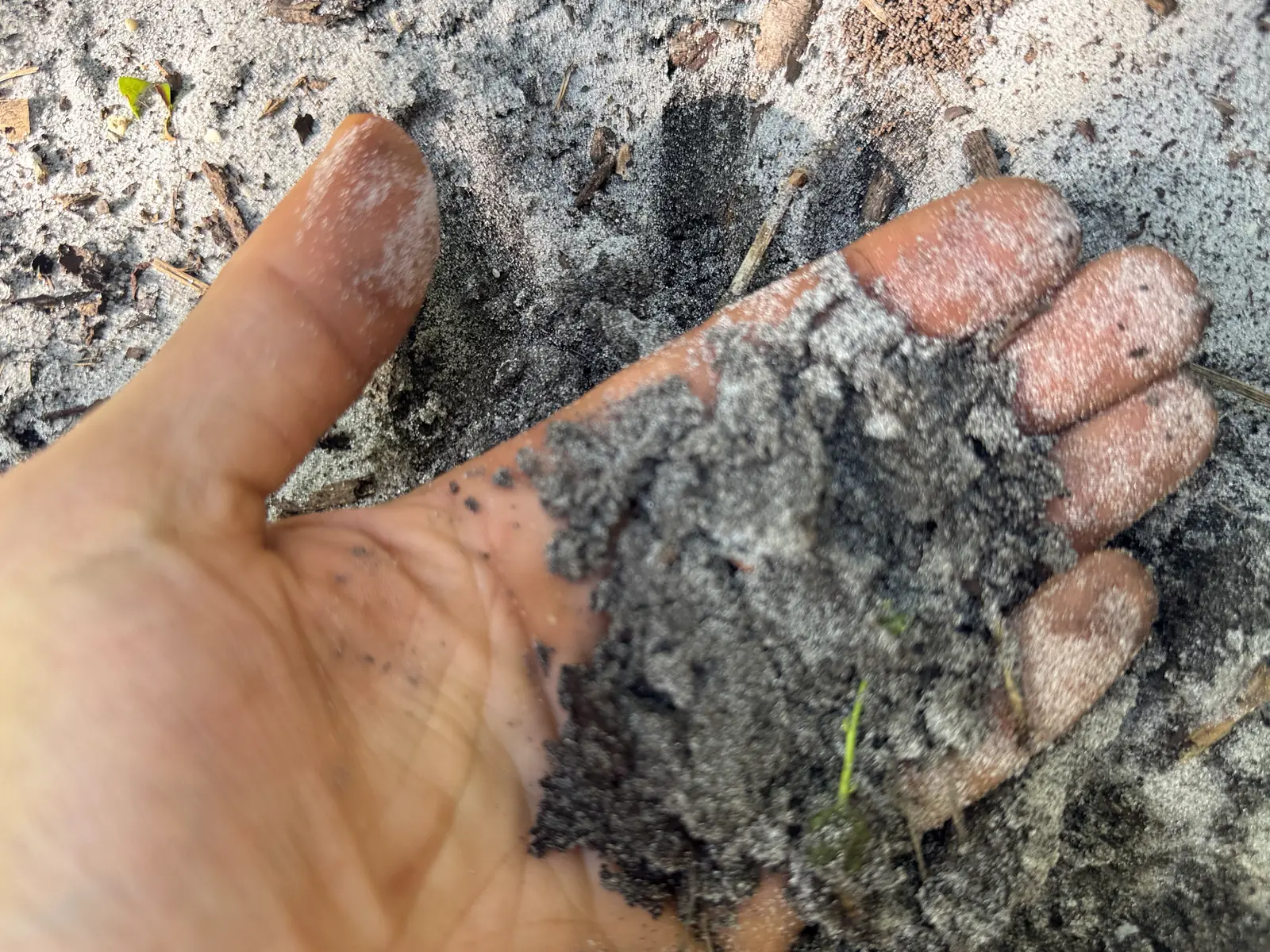 2022: grey, loose sand with almost no organic matter.
1. Compost first
Compost brings organic matter and soil life into ground that has neither. Work it in around new plantings and top up every season.
2. Mulch deep, and keep mulching
A thick mulch layer shades the soil, holds moisture through dry springs and slowly turns into the organic matter Florida sand is missing. Keep it wide and pulled back from trunks.
3. Chop and drop
Fast biomass plants such as bananas, sugarcane and biomass grasses are cut back and left where they fall. That feeds the soil in place instead of hauling nutrients away.
4. Plant densely and grow roots
Dense planting fills the ground with roots, which open the soil and feed soil life. Root crops did double duty: sweet potatoes and cassava were among our strongest first-year crops, about 150 pounds of sweet potatoes and 100 pounds of cassava, and part of that biomass stayed in the system.
5. Skip the synthetic sprays
Living soil depends on living organisms. We use compost teas and companion planting rather than synthetic pesticide sprays.
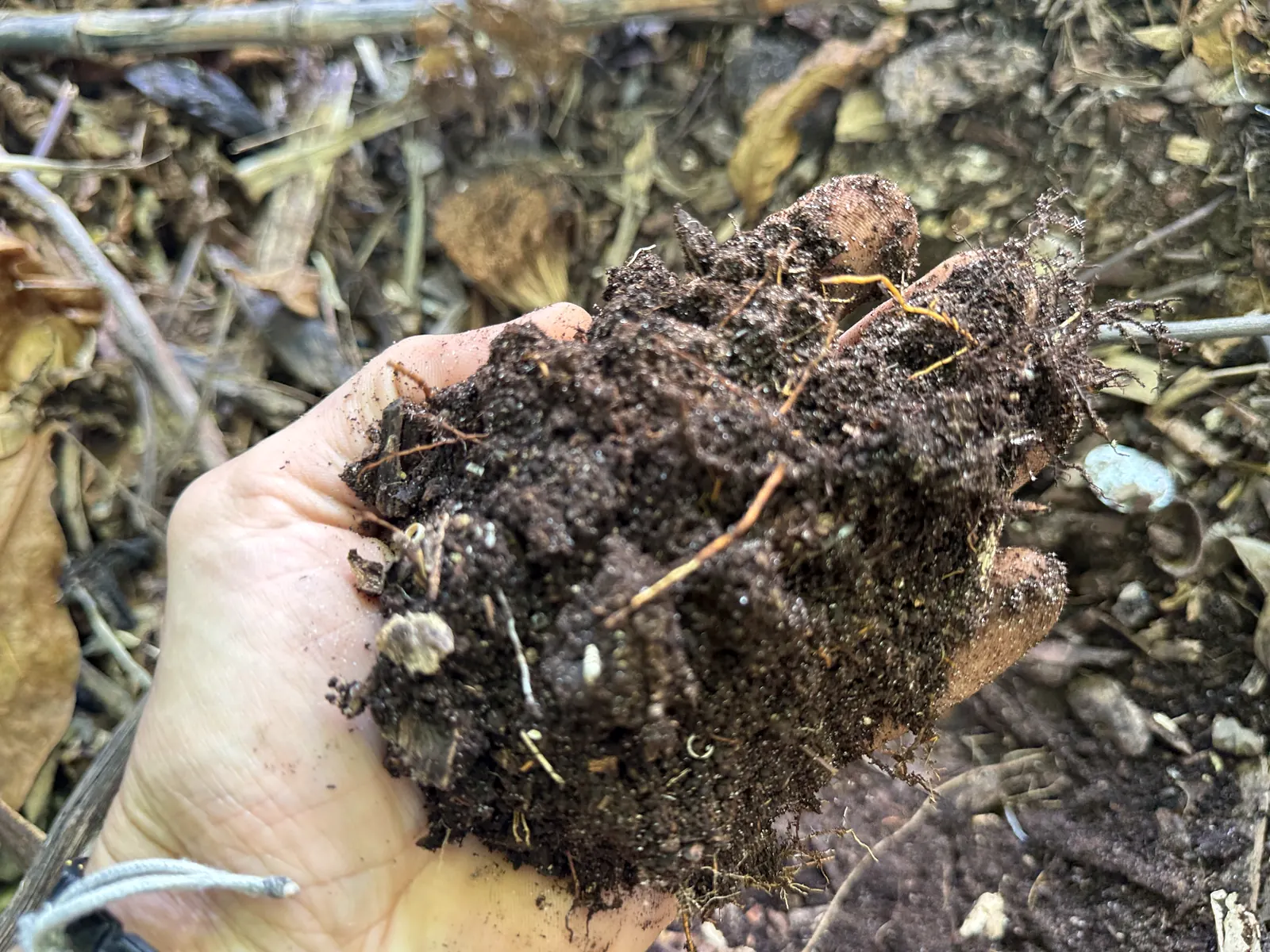 2026: the same ground, dark, composted and full of roots.
Harvest while the soil builds
You don't have to wait years for food. Fast plants like papaya, banana and mulberry can produce in the first year, and figs, pomegranate, Barbados cherry and strawberry tree (Jamaican cherry) often fruit within the first year too. Larger fruit trees like mango and avocado generally take a few years. Size matters: the bigger the pot and the tree at planting, the sooner it fruits. The fast layer feeds the family and the soil while the long-term trees grow in.
Watch: Soil first: a fruit-filled Florida backyard food forest · More on our YouTube channel
Common questions
How do you improve sandy soil in Florida?
Build organic matter from the top down: compost, a deep and constantly renewed mulch layer, chop-and-drop biomass plants, and dense planting so roots fill the ground.
How long does it take to build soil in Florida sand?
It is gradual, but visible change comes within a few years. Our Bradenton yard went from grey sand in 2022 to dark, root-filled soil by 2026.
Can you grow food while the soil is still sandy?
Yes. Sweet potatoes, cassava, bananas and papayas produce early and add biomass that keeps building the soil.
Cold-tolerance and planting guidance in this article follows UF/IFAS Extension recommendations for Florida dooryard fruit.