Short answer: don't fight the water; design around it. On flood-prone Florida land, lift water-sensitive fruit trees onto raised rows, let the low ground between them slow and hold storm water, and match each plant to how wet its spot gets. You won't make a property flood-proof, but you can keep roots out of prolonged saturation, which is what kills most fruit trees on wet sites.
This is the approach we used on a four-acre private residence in Sarasota, where a previous food forest had already failed. The full project is in our Sarasota case study. Here is what other wet properties can take from it.
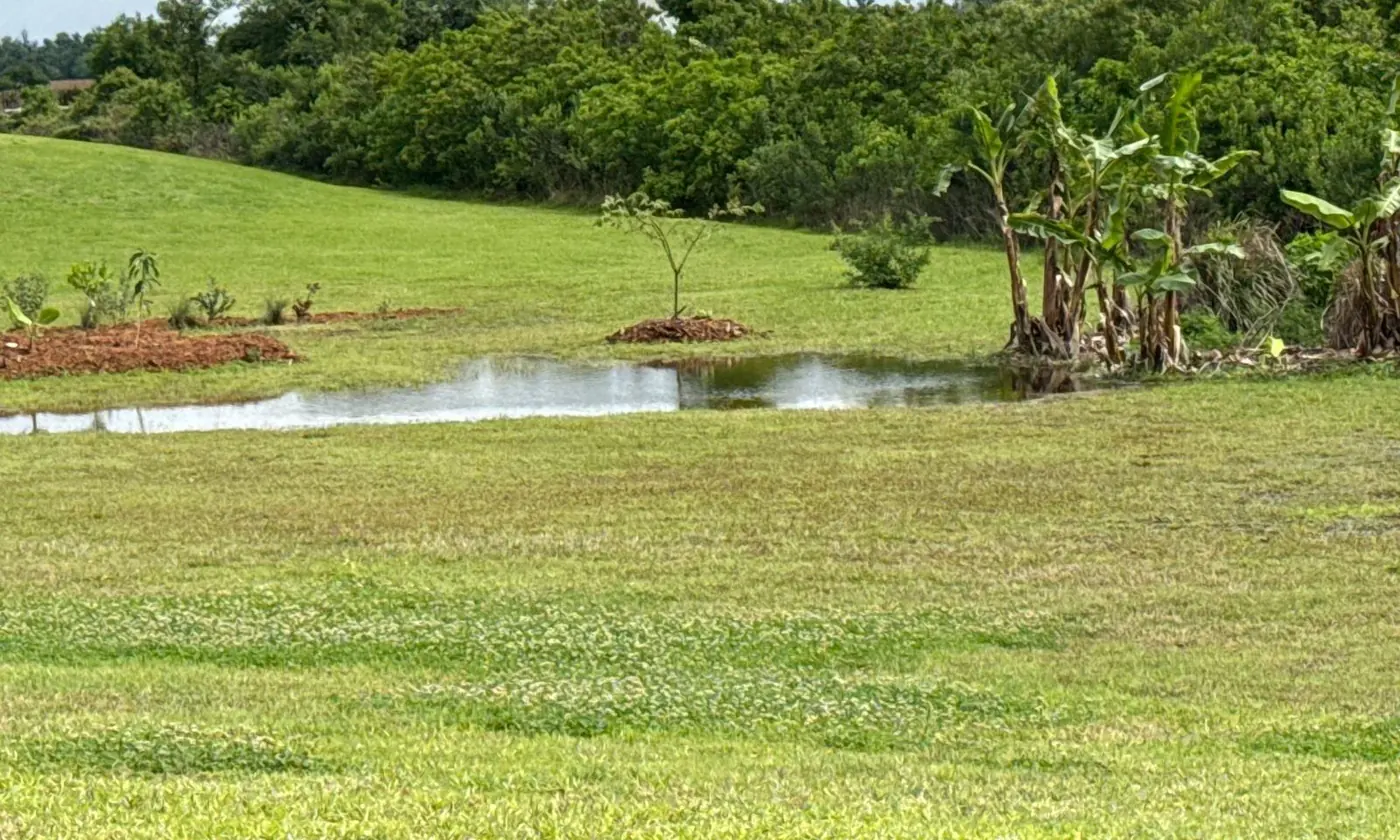 The starting point: low ground that holds water after heavy rain.
1. Watch where the water actually goes
Before any design, find out how your property behaves after a summer storm. Where does water sit, and for how long? Which corners dry out first? Photos taken the morning after a heavy rain are worth more than any survey. On the Sarasota property, the rows were adjusted in the field during installation to stay clear of the wettest pockets.
2. Raise the root zones
Avocado, mango and many tropical fruit trees hate wet feet. Long, raised, mulched production rows lift their roots above seasonal water while keeping paths open for access and care. The lower channels between rows are designed to slow water down, encourage it to soak in and keep it away from sensitive roots.
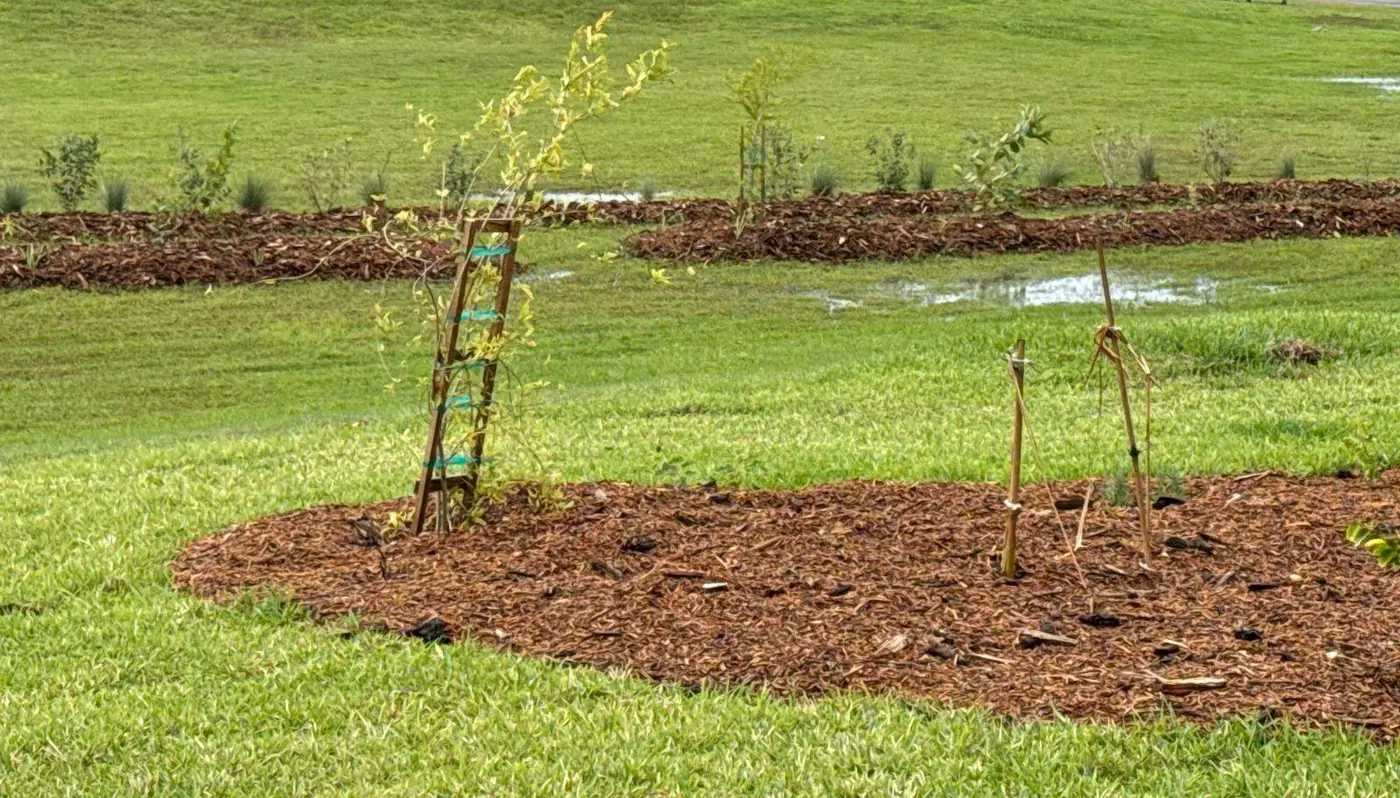 Same storm: the raised row stays above the water line.
3. Put the right plant in the right spot
Wet-tolerant plants can sit lower; water-sensitive trees go highest. Wind and privacy hedges run along the rows, and support plants shade, feed and protect the fruit trees. A mix of proven producers (mango, avocado, mulberry, loquat, fig, citrus) and adventurous tropicals spreads the risk.
4. Plan around septic and drainfields
On the Sarasota job, drainfield limits only became clear after the first design, so the plan changed: herbs, medicinals and smaller-rooted plants went over and near the drainfield, and larger fruit trees moved farther away. If you are on septic, find the drainfield before you design.
5. Expect surprises, then adapt
A significant freeze arrived just weeks after planting. Some tropicals were lost while citrus came through well. Even so, avocado fruit was documented about three months after planting, and the raised rows have performed as designed through their first rainy season. That's one season of results, not a long-term guarantee.
How soon will a wet-site food forest produce?
Fast plants like papaya, banana and mulberry can produce in the first year, and figs, pomegranate, Barbados cherry and strawberry tree (Jamaican cherry) often fruit within the first year too. Larger fruit trees like mango and avocado generally take a few years. Size matters: the bigger the pot and the tree at planting, the sooner it fruits. A larger tree costs more up front, but it buys you time.
Common questions
Can you plant a food forest on land that floods?
Yes, if the design works with the water. Raised rows lift water-sensitive roots above seasonal flooding, low channels slow and hold storm water, and plants are placed by how wet each spot gets. It reduces saturation but doesn't make a site flood-proof.
Which fruit trees hate wet feet in Florida?
Avocado is the classic example, and many tropical fruit trees suffer in prolonged saturation. Plant them on the highest, best-drained ground or on raised rows.
Can I plant over a septic drainfield?
Keep large fruit trees away from drainfields. Herbs, medicinal plants and smaller-rooted plants are a better fit over and near them. Locate your drainfield before designing.
Cold-tolerance and planting guidance in this article follows UF/IFAS Extension recommendations for Florida dooryard fruit.